

The unit doing its job
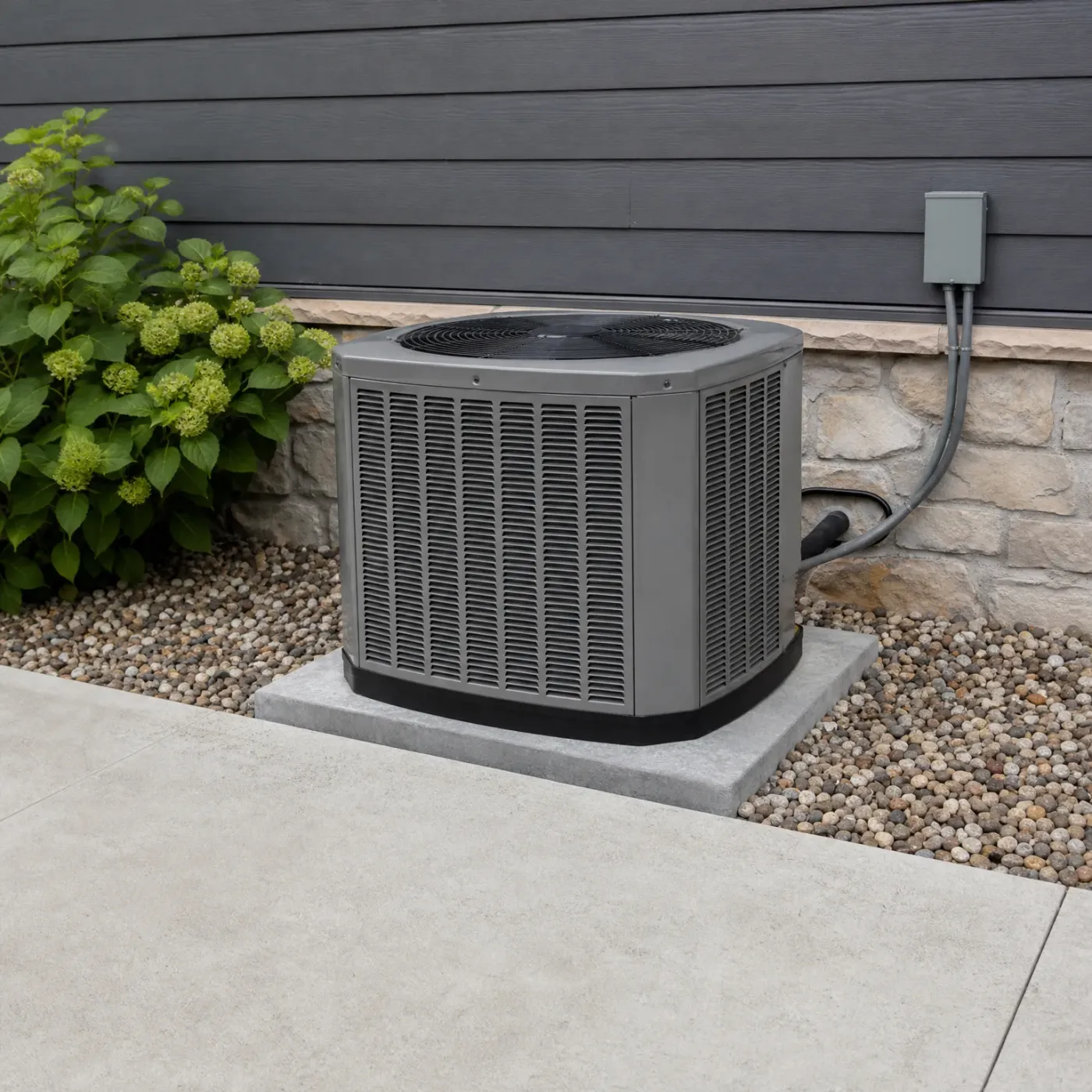
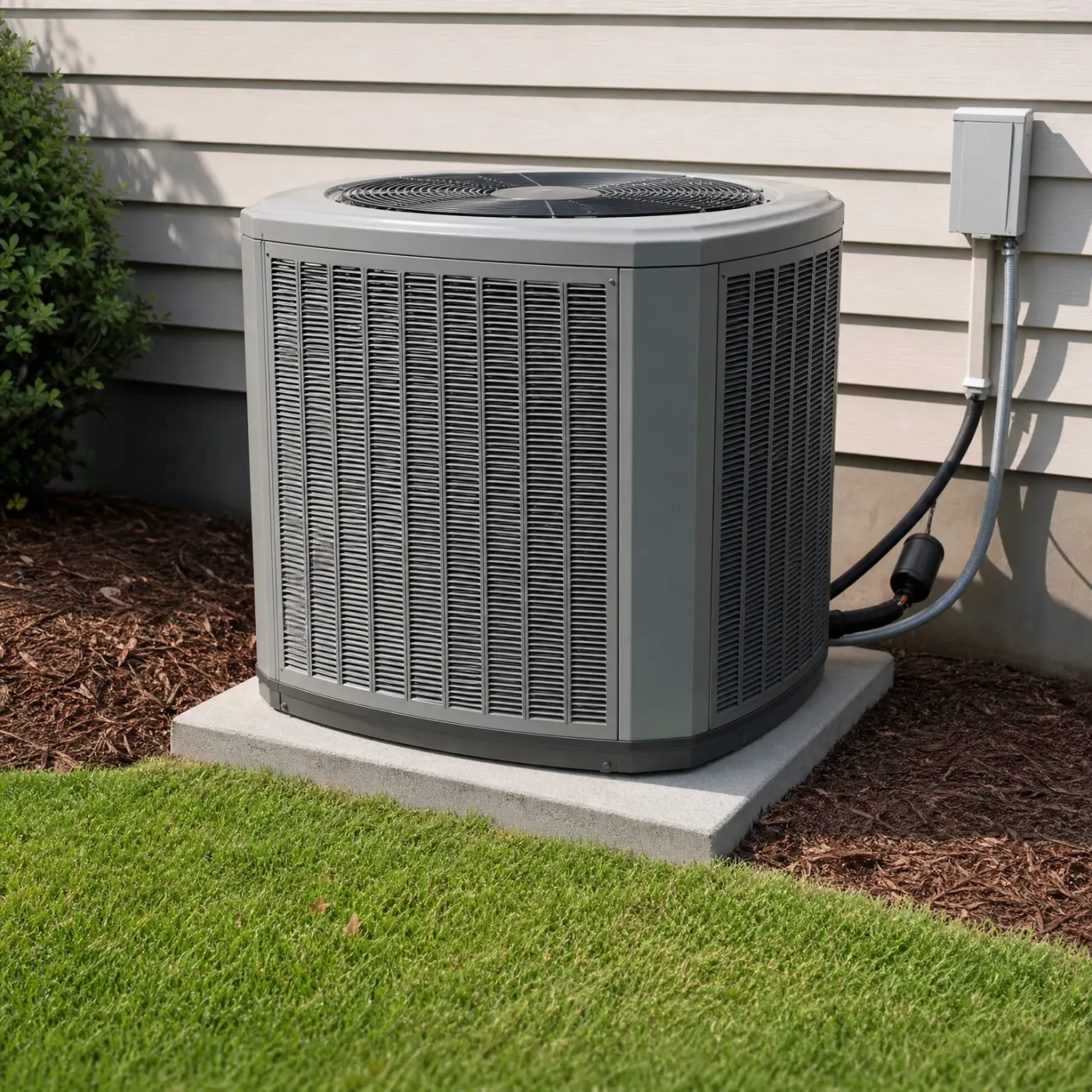
This is what the outdoor unit should look like while it runs. The coils stay clear, the pad is clean, and the refrigerant lines and conduit run straight into the wall without strain. Nothing about it needs attention.
Warm air from the vents when the thermostat is set cold usually means the system is running but not cooling, which narrows down fast once someone is looking at it in person. The harder part is getting to that point. You could spend an afternoon searching for AC repair companies around St. Petersburg, calling a few, describing the same problem to each one, then waiting to see who calls back with a quote and who doesn't. This page skips that. One request connects you with a licensed contractor local to Pinellas County, someone who works on home air conditioners through the muggy months here and has a good sense of what usually causes this. You explain it once. No list of companies to sort through, no second-guessing who's reliable, just one contractor who services this equipment regularly getting in touch with you directly.
Your air conditioner is running, the thermostat is set well below the room temperature, and warm air is still coming out of the vents. In Pinellas County that's a bad sign fast, since the house heats back up quickly once the system stops actually cooling, and you're left wondering if this is a quick fix or something bigger.
If the air is warm but still moving, the fan is working and something else isn't. A low refrigerant charge means the system can't pull heat out of the air anymore, usually from a leak somewhere in the lines. A failed compressor means the unit can run and move air without cooling it at all. Either way the system keeps drawing power while doing none of the job you're paying it to do. In a St. Petersburg summer that matters more than most places, since the house doesn't get a break overnight and the power bill keeps climbing while the air stays warm. A contractor can tell which one it is with a gauge set and a look at the compressor within minutes of arriving.




A few things cause warm air to come out of the vents. The system could be low on refrigerant from a leak, which means it's not absorbing heat from the air the way it should. The outdoor unit's coil or fan could be blocked or failing, so heat has nowhere to go. A dirty filter can choke airflow across the indoor coil until it ices over, and then what comes out the vents is just room air passing by a block of ice. Less often, the compressor itself has failed, which in a St. Petersburg summer tends to happen on the hottest, hardest-working days.
Each of those causes points to a different repair, and some of them need tools to tell apart. A refrigerant leak takes gauges to confirm and a leak search to find. A frozen coil has to thaw before anyone can see what's underneath it. A failed compressor is often diagnosed by testing it directly, since it can look like other problems from the outside. Guessing wrong means paying for a part that wasn't the issue. A contractor who works on this equipment around St. Petersburg every summer has usually seen all of these fail before and knows where to look first.
Most of these causes trace back to the same two coils working against each other. The indoor coil needs steady airflow and the right refrigerant charge to pull heat out of the house. The outdoor coil needs its fan running to dump that heat outside. Break either side and the system keeps running without doing the job. A refrigerant leak makes the compressor work harder while the indoor coil gets cold enough to ice over, and once ice forms, airflow drops off fast. A weak capacitor can slow or stop the outdoor fan, so the heat has nowhere to go even if the refrigerant is fine. A dirty filter causes the same icing from the other direction, by starving the indoor coil of air. In some cases the compressor or the reversing valve has failed, and the system is just moving room-temperature air through the ducts. A contractor sorts out which one it is by checking pressures and electrical readings before touching anything else, since several of these look identical from the thermostat.


A licensed pro who repairs air conditioners in Pinellas County gets your request.
You're not committing to anything by asking.
A St. Petersburg house holds heat fast once the AC stops pulling its weight. Warm air from the vents now usually means a warmer house by afternoon, and a house that stays warm through a humid stretch starts to feel damp indoors, on top of furniture and along walls. Run the system in this state too long and you risk more than discomfort. A compressor working against a refrigerant leak or a dying capacitor can burn itself out, turning a repair into a replacement. An iced-over coil left to sit can send water past the drain pan and into the ceiling or floor below the air handler. And the longer warm air keeps coming, the higher the bill climbs for a system that still isn't cooling anything. None of that happens the same way in every home, but it's the risk of waiting here, in a place where the outdoor temperature gives the house little chance to cool on its own.

Summer air in Pinellas County holds a dew point around 74°F, measured by NOAA across June, July and August. That's heavy air, the kind that sits on your skin the second you step outside. Your air conditioner has to pull that moisture out of the house as well as cool it, and when it's blowing warm instead, none of that moisture is coming out either. You'll notice it in the air indoors before the thermostat even shows a big jump: things feel sticky, doors swell a little, towels stop drying. A system that's struggling in weather like this falls behind fast, because there's so much moisture for it to fight in the first place.
NASA POWER T2MDEW
The vents are blowing but the air isn't cold, and the thermostat number isn't moving the way it should. Rooms that are usually fine, like a bedroom with the door shut or a sunroom in the afternoon, are starting to feel sticky first. You might notice the air itself feels heavier, not just warmer, since the system has stopped pulling moisture out along with the heat. Check a vent with your hand: air moving but barely cool, or not moving much at all, both point the same direction. Left alone through a Florida afternoon, the house keeps climbing, and the damp that comes with it isn't just uncomfortable. It's the kind of moisture that settles into carpet, drywall and furniture if it sits for days.
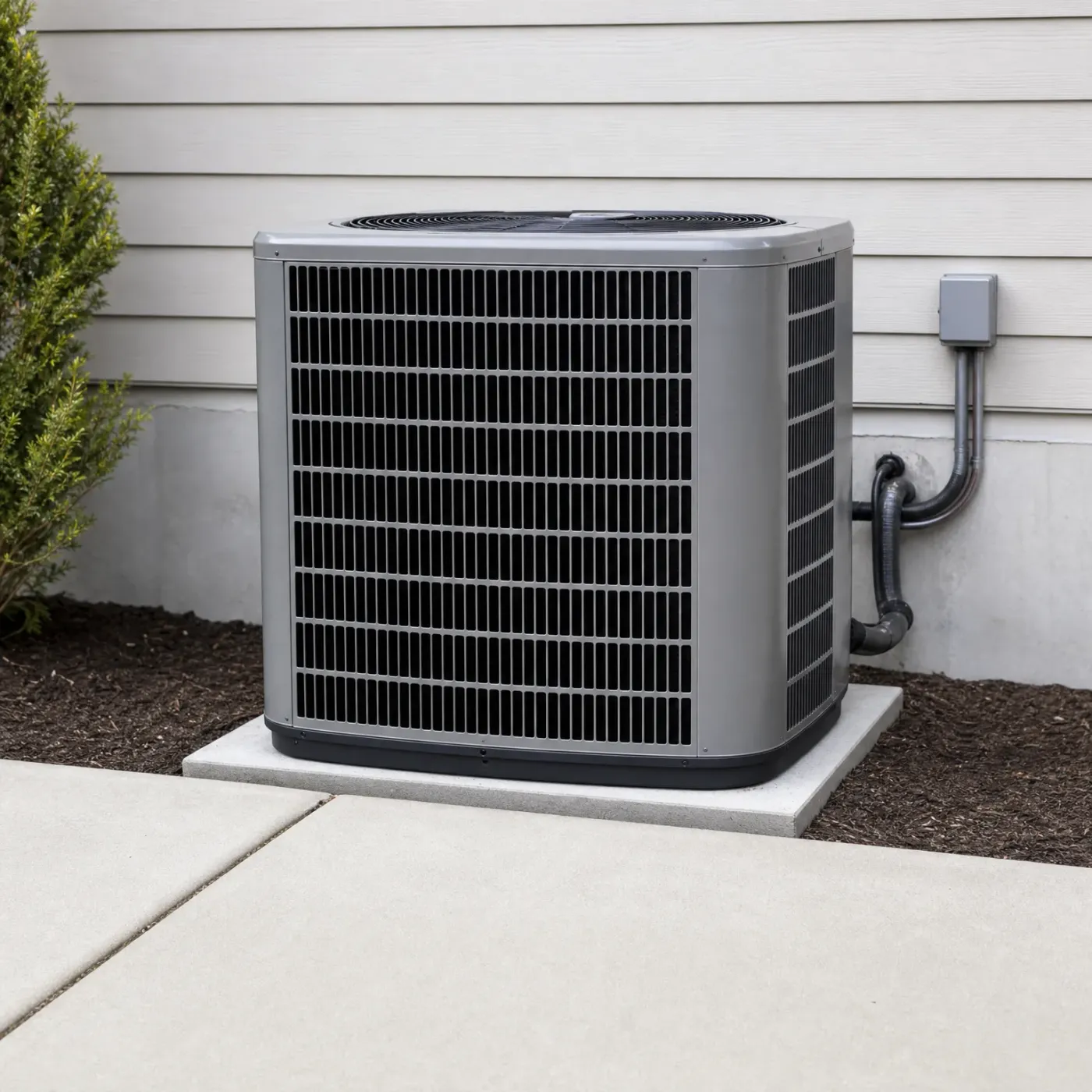
This is what the outdoor unit should look like while it runs. The coils stay clear, the pad is clean, and the refrigerant lines and conduit run straight into the wall without strain. Nothing about it needs attention.
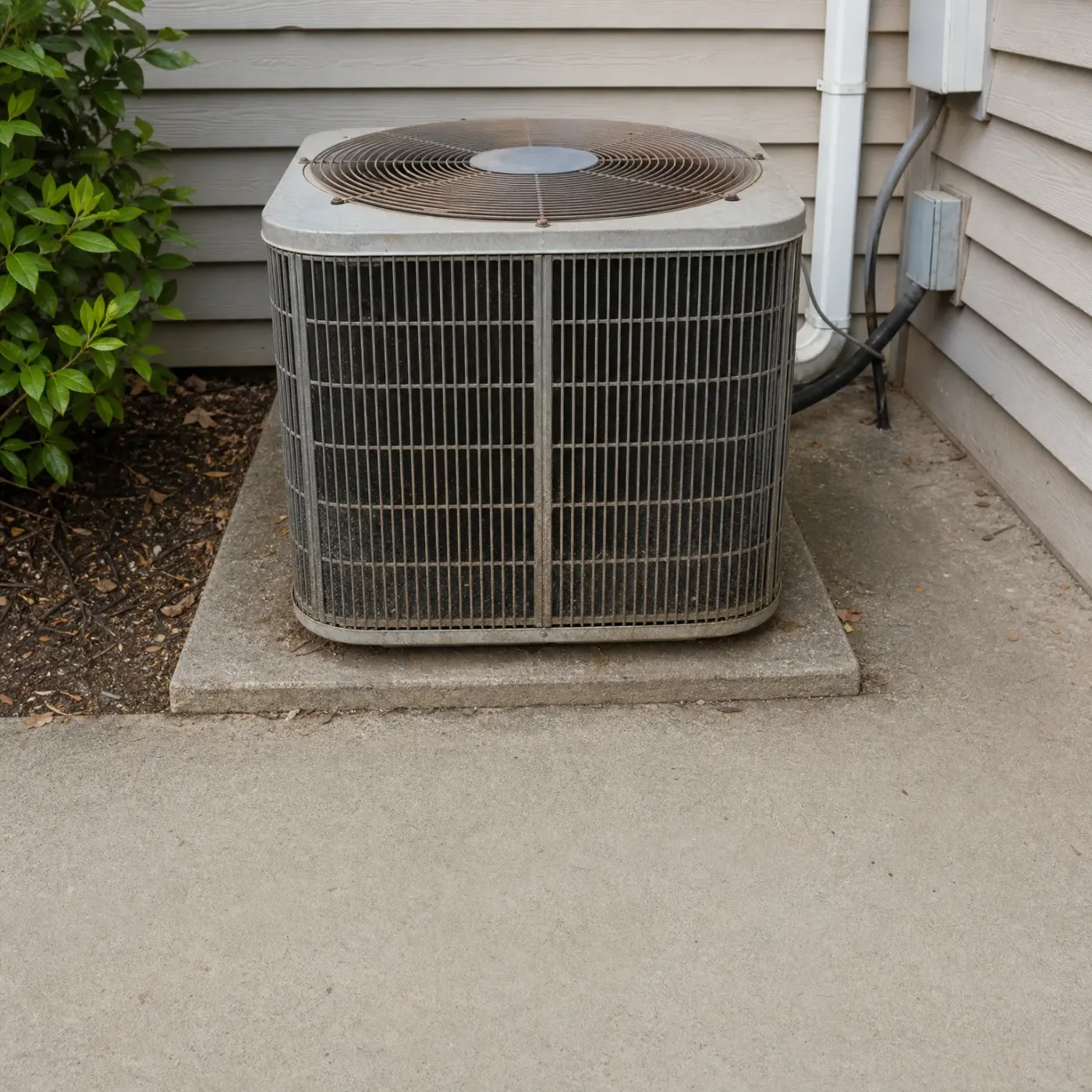
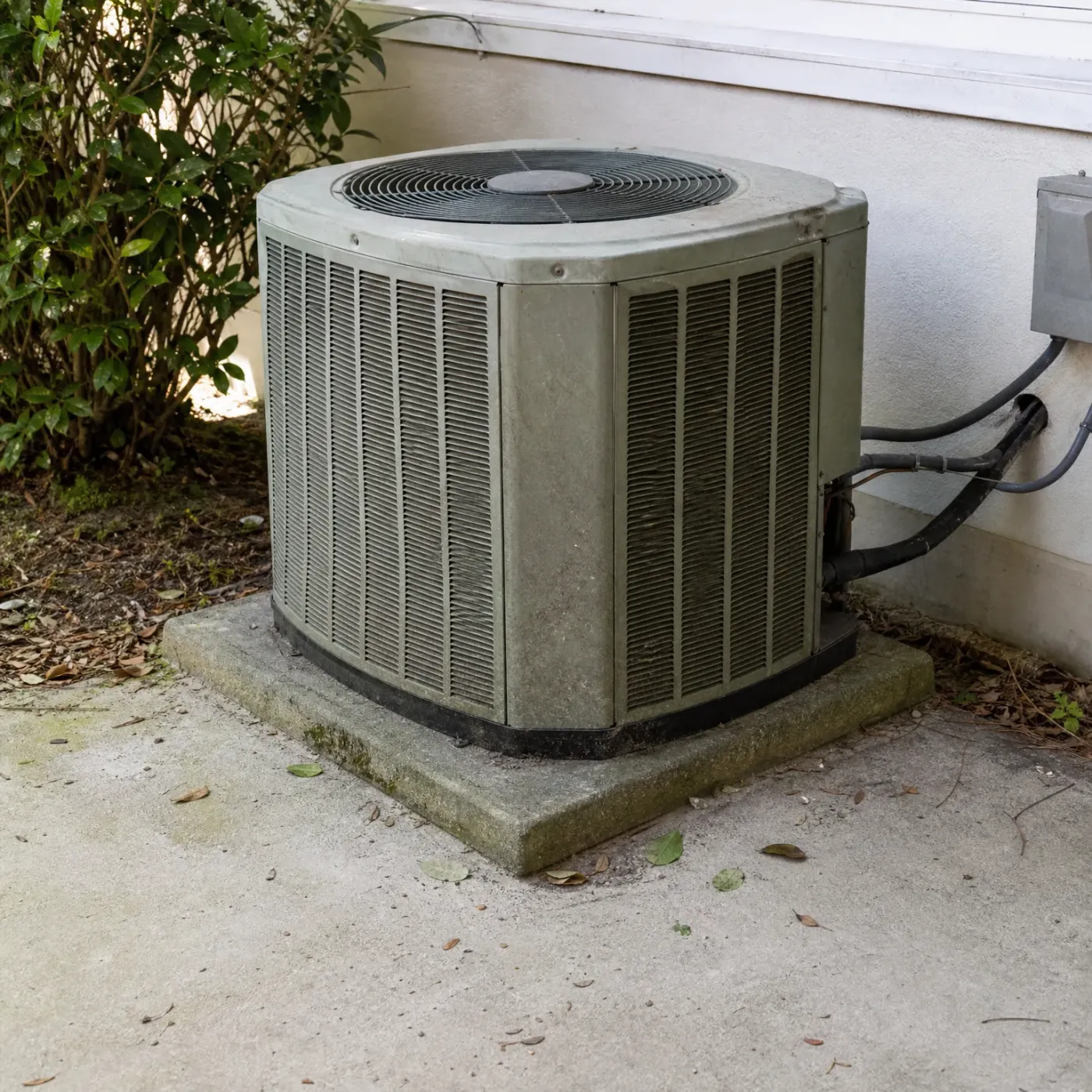
Dirt has built up across the grille, and the metal shows its age. The refrigerant lines still reach the disconnect box, but a coil caked like this can't shed heat the way it needs to, no matter how long the compressor runs.
Your AC runs nearly ten months here, March through December, so a unit blowing warm air isn't resting between seasons, it's failing in the middle of one. A short break in service shows up fast, and the system has little downtime left in the year to make up for it.
NOAA nClimDiv 1991-2020
Warm air out of the vents with the thermostat set low is the system running without cooling, and that comes down to a handful of mechanical causes: a low refrigerant charge, a blocked or dying outdoor coil, a dead capacitor, a fan motor that's given out. None of those get fixed by waiting, and none of them get diagnosed over the phone. Someone has to stand at the outdoor unit, check the coil, check the charge, and watch what the capacitor and fan are actually doing before any of this gets sorted out.
That's the part that takes the time most people don't have on a weeknight. Finding a contractor who's licensed for Pinellas County, calling around, explaining the same thing about warm vents and a cold thermostat setting to three different companies, then comparing what each one quotes. A contractor who services AC units around St. Petersburg through the summer has already been out on this exact call more than once this season. Low charge, iced coil, failing capacitor. They've seen the pattern before they get to your door.
The match here is to one contractor, not a handful of them. One visit, one explanation of what the house is doing, not a string of calls from companies bidding against each other for the job. The house will keep heating back up in the meantime, same as it has been, but the part where you'd have had to go find someone to look at it is the part that's handled.
Skip calling around