Get AC Florida

Why your AC smells like burning in Florida

Step 1 of 3: Equipment

A burning smell from your AC usually means something electrical is overheating, not the refrigerant or the air itself. The most common cause is a motor bearing wearing out, often the blower motor or the fan motor outside, which runs hard all summer here and can seize or burn out its windings. A failing capacitor or a loose wire at a connection can do the same thing, getting hot enough to scorch its insulation. Dust burning off a heat strip or coil when the system first kicks on after sitting idle is normal and fades in a few minutes. A smell that lingers, or that smells sharp and electrical rather than dusty, means a part is failing and drawing more current than it should. Running the system in that state risks the motor, the wiring, or worse. Shut it off and have it looked at before you run it again.

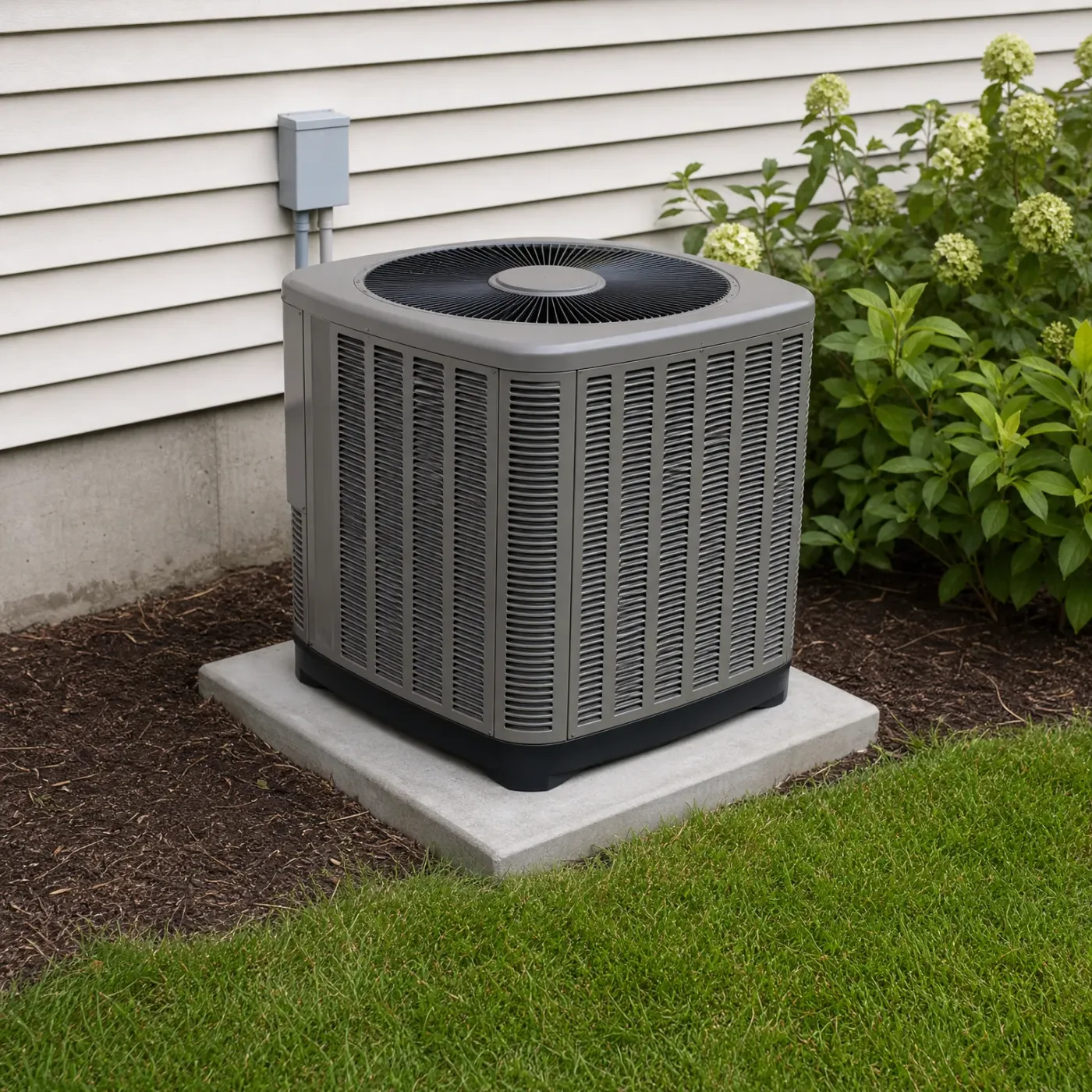
An outdoor air conditioning condenser unit on a concrete pad beside a house with horizontal lap siding, with a gray electrical disconnect box and conduit on the wall, mulch bed and shrub to the right, and mown grass in the foreground.

No smell, running clean

A condenser like this one pulls air through the coil fins and pushes it back out the top. With the panel clear and the fan turning freely, the motor isn't working against anything. No strain, no hot smell, just the unit doing its job through another Florida summer.

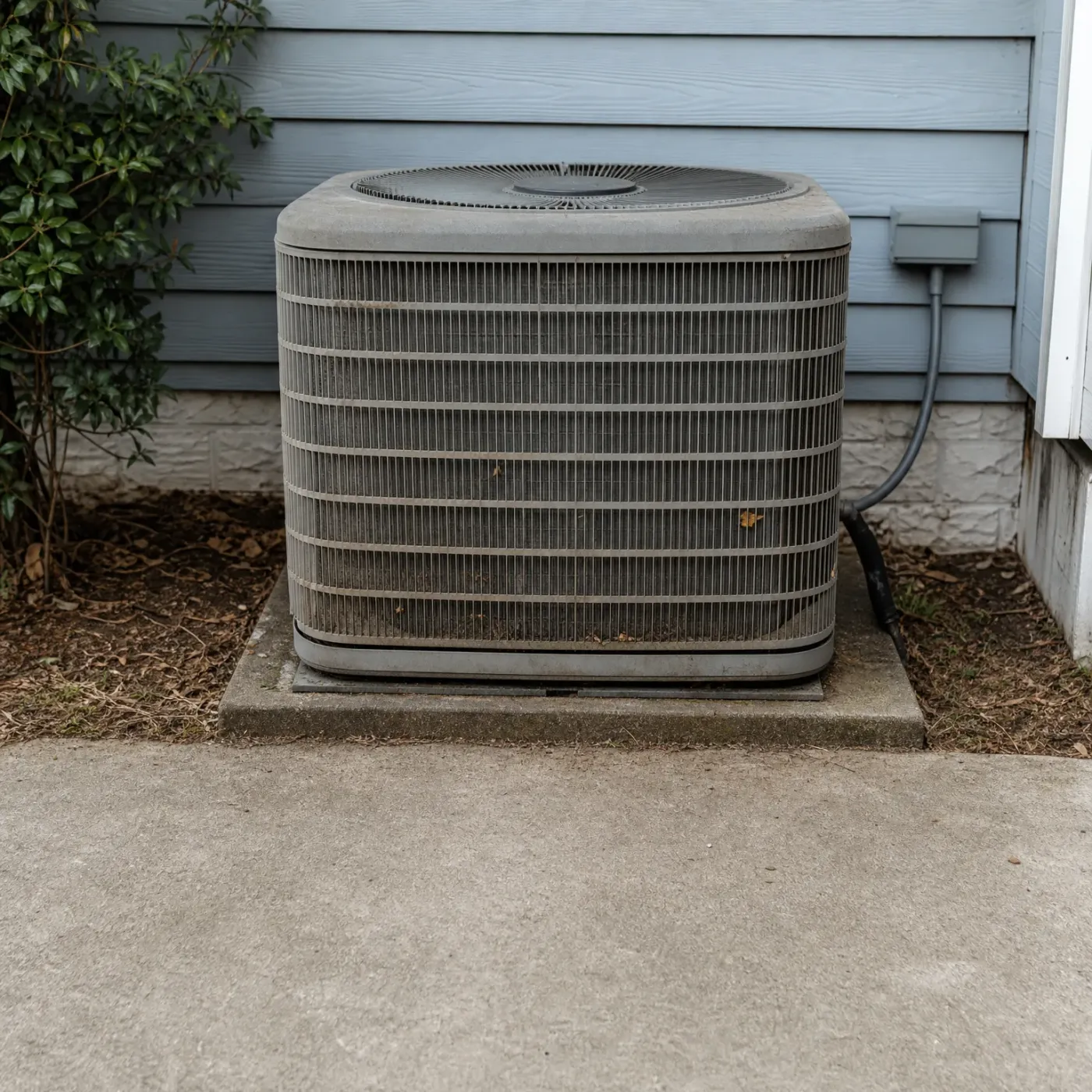
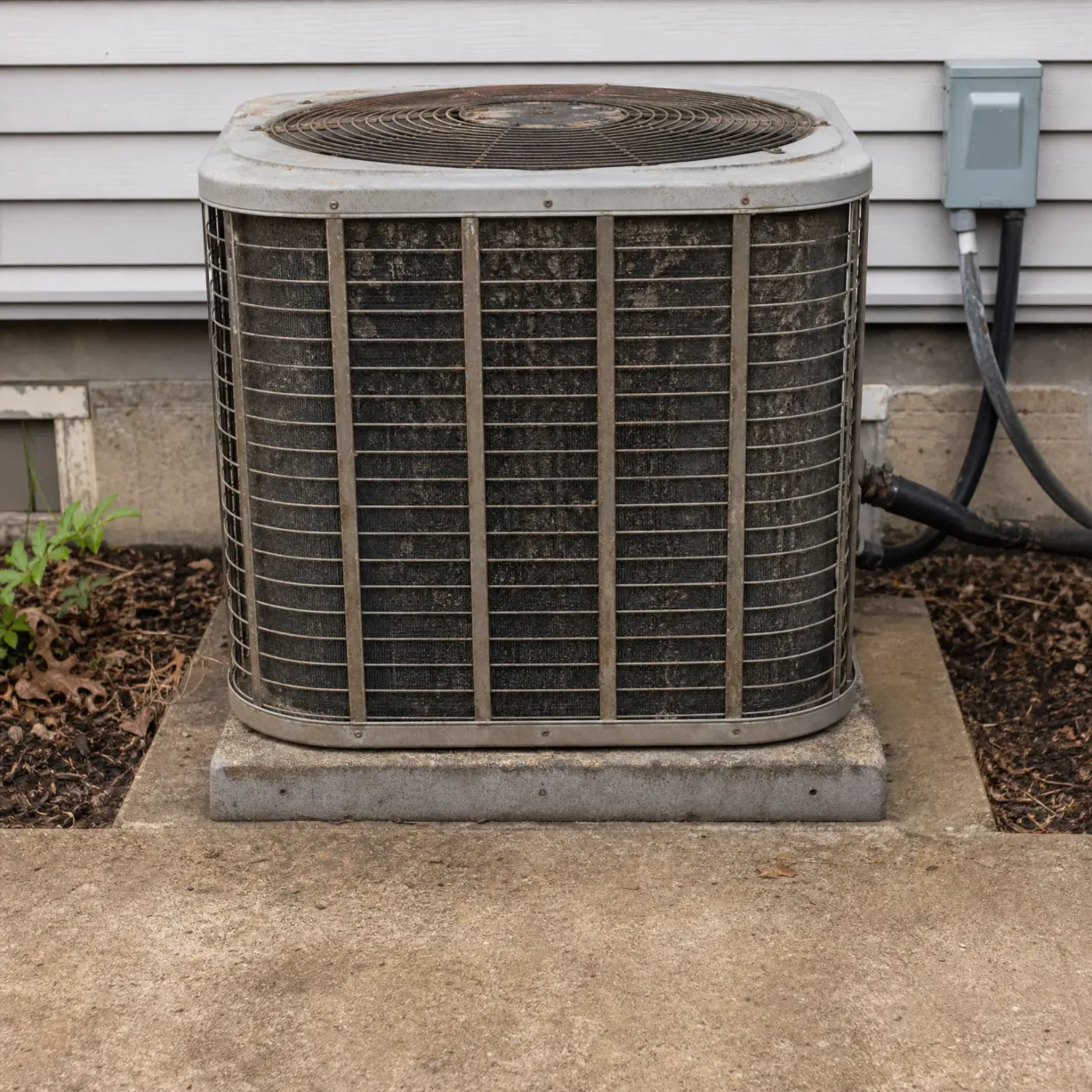
An outdoor air conditioning condenser unit on a concrete pad beside a house with light blue horizontal siding, with a shrub to the left and a conduit and disconnect box on the wall to the right.

Coil caked with debris

When the coil guards look like this, the motor behind them is pulling against a wall of dust instead of open air. That makes it run hotter than it should. Keep it up for a few summers and the bearing or the windings can burn, which is where that electrical smell comes from.

A gray-haired man in a dark long-sleeve shirt sits on a gray sofa in a living room, looking toward a sunlit window with sheer curtains.
A gray-haired man in a dark green sweatshirt sits on a sofa in a living room, looking toward a bright window, with a houseplant, lamp, fireplace and framed art behind him.
A gray-haired bearded man in a dark green collared sweater sits on a sofa in a living room with a window, houseplant, floor lamp and bookshelves, looking off to the side.
A gray-haired man in a dark green sweater sits on a sofa in a sunlit living room, looking off to the side, with a framed landscape painting, dining table and shelving behind him.

A dusty burning smell often clears on its own

Dust on a hot heating element or a motor that just kicked on can smell sharp for a minute, then fade. If it lingers past a few minutes, something's actually overheating.

Find a licensed pro

A sharp, steady smell means shut it off

If the smell doesn't fade and gets stronger, turn the system off at the thermostat or breaker. Running it longer risks the motor or the wiring behind it.

Find a licensed pro

What part inside the AC actually burns to make that smell?

You want to know what's actually burning when you catch that smell, not just a general idea that something's wrong. Knowing the part helps you understand why it happens and whether it's something you should worry about right away or just keep an eye on.

Usually it's wire insulation or motor windings, not a flame

Nothing in your AC burns the way paper or wood burns. What you're smelling is the coating on electrical wires, or the windings inside a motor, getting hot enough to scorch. A motor bearing that's worn lets the shaft drag, and the motor pulls harder to keep spinning. That extra draw heats the windings past where they're built to run. A loose wire connection does something similar: current has to jump a small gap, and that gap heats up and can scorch the insulation around it. Either way, the smell is a byproduct of electricity meeting resistance it shouldn't have to fight, not something actually catching fire.

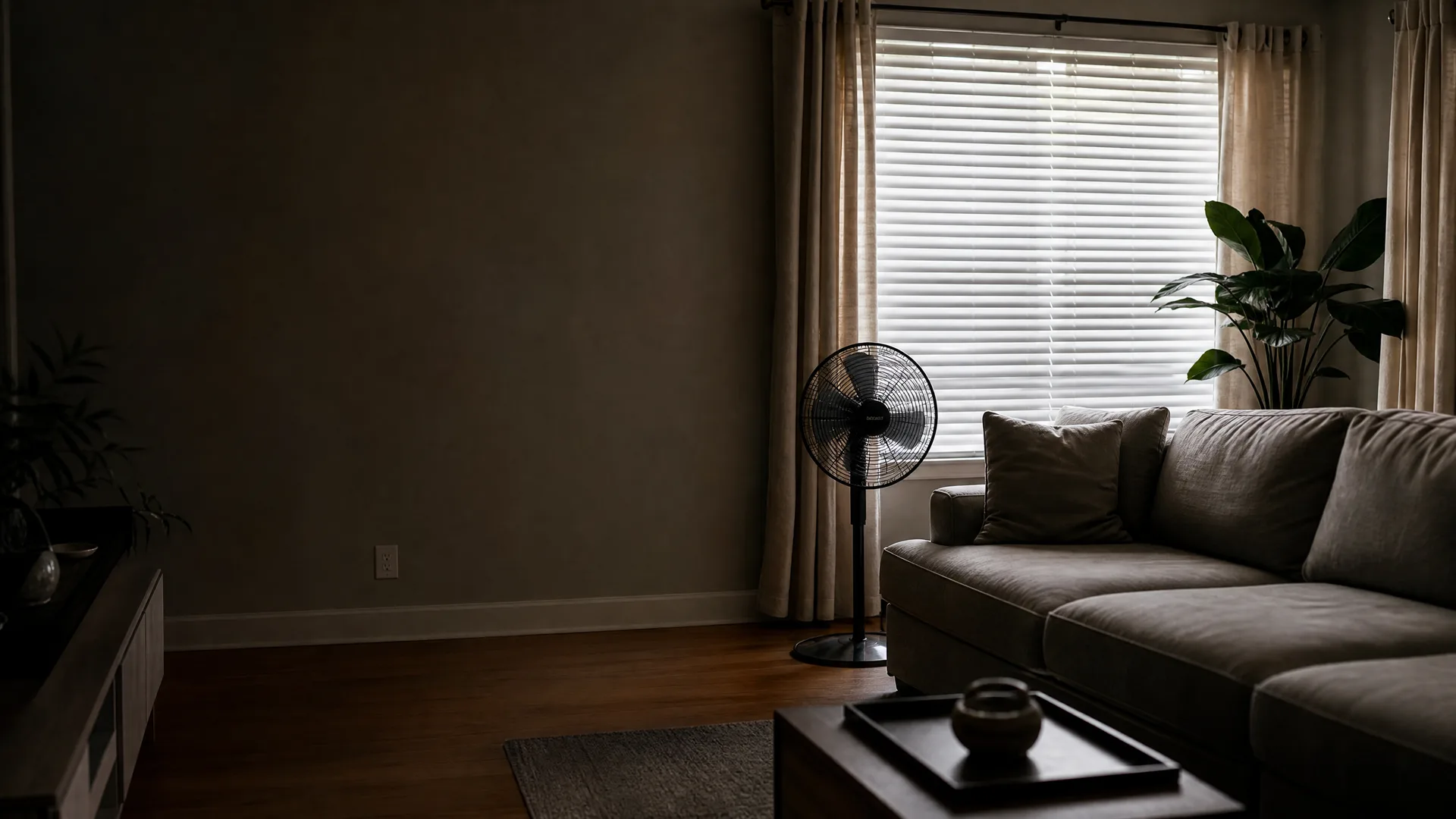
A dimly lit living room with a gray sectional sofa, a standing pedestal fan, a curtained window with blinds, a potted broad-leaved plant, a wooden coffee table with a tray and lidded jar, and a rug on dark wood flooring.

It's just past two and the blinds are drawn against the sun, but the room still holds that flat afternoon heat. A floor fan turns next to the couch, pushing air around more than cooling it. You caught that burning smell from the vent about twenty minutes ago, faint at first, and now you're sitting with it, waiting to see if it comes back. The AC is still running. You can hear it cycling the same as always, same hum, same vent noise. Outside the sun is doing what it does every July afternoon here, and the condenser is working through the worst part of the day it has to carry.

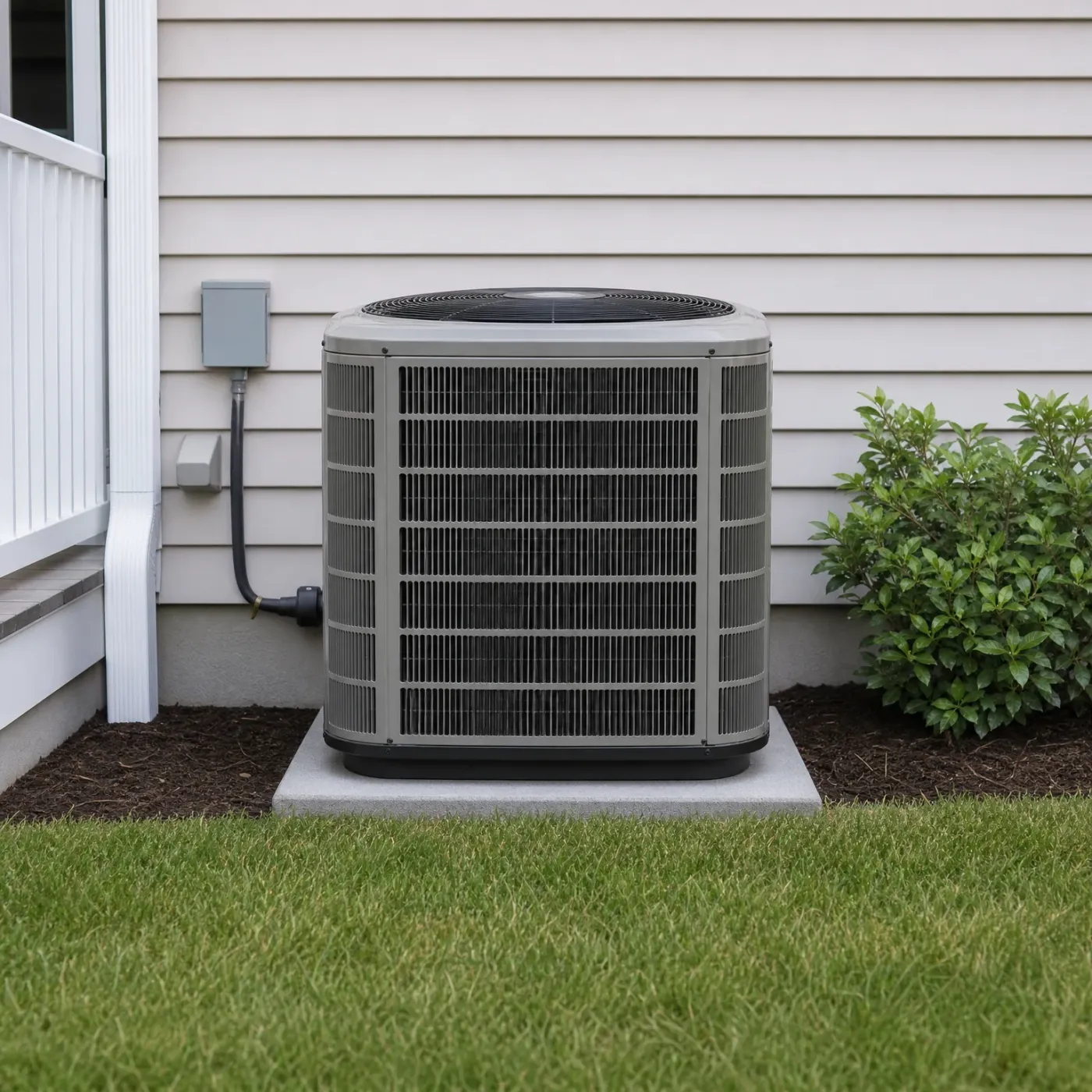
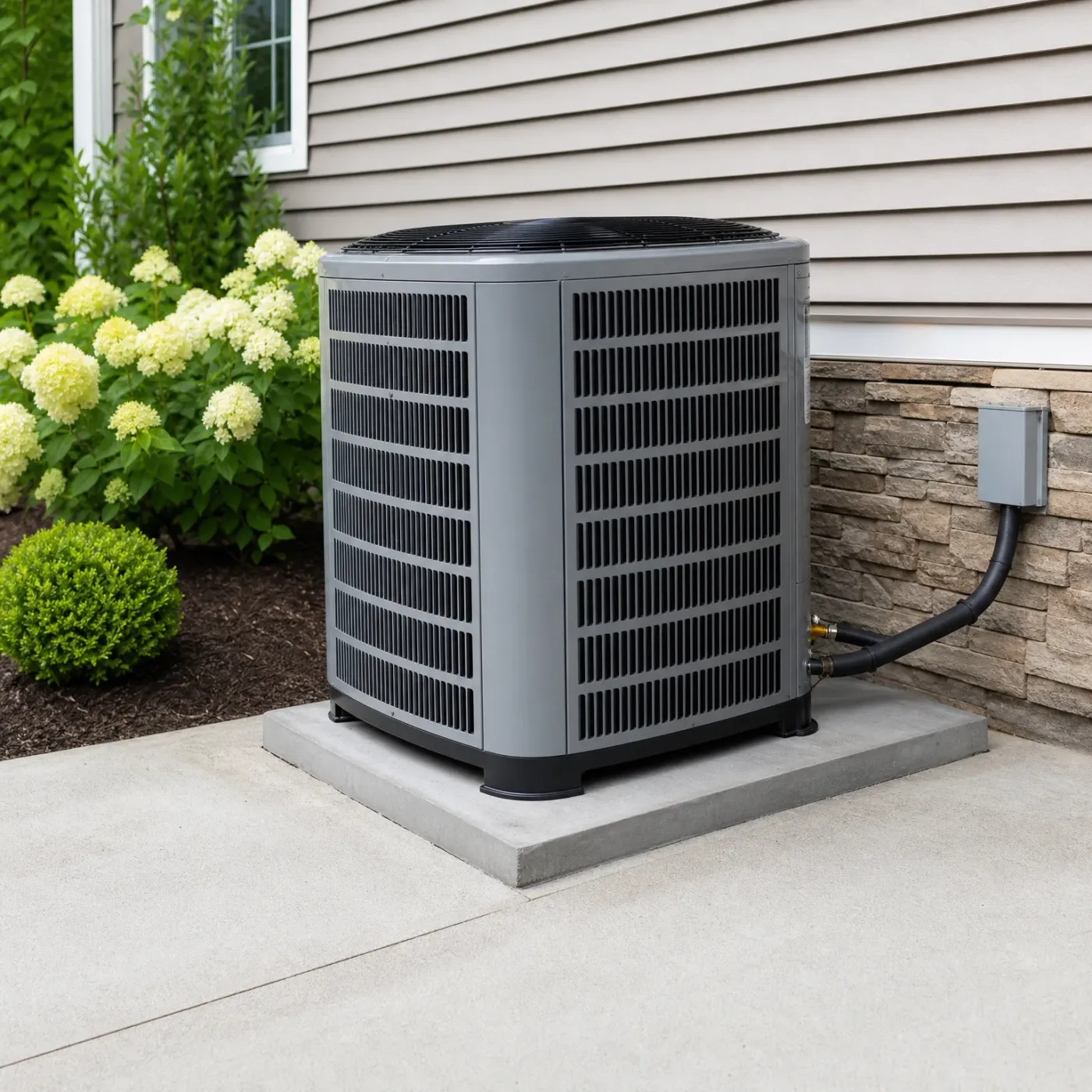
A gray outdoor air conditioning condenser unit on a concrete pad beside a house with horizontal siding and a stone veneer base, with refrigerant line and electrical disconnect box on the wall and flowering shrubs to the left.
This condenser's casing and fins are clean, and the air moving through it isn't working against years of dirt and grime buildup.
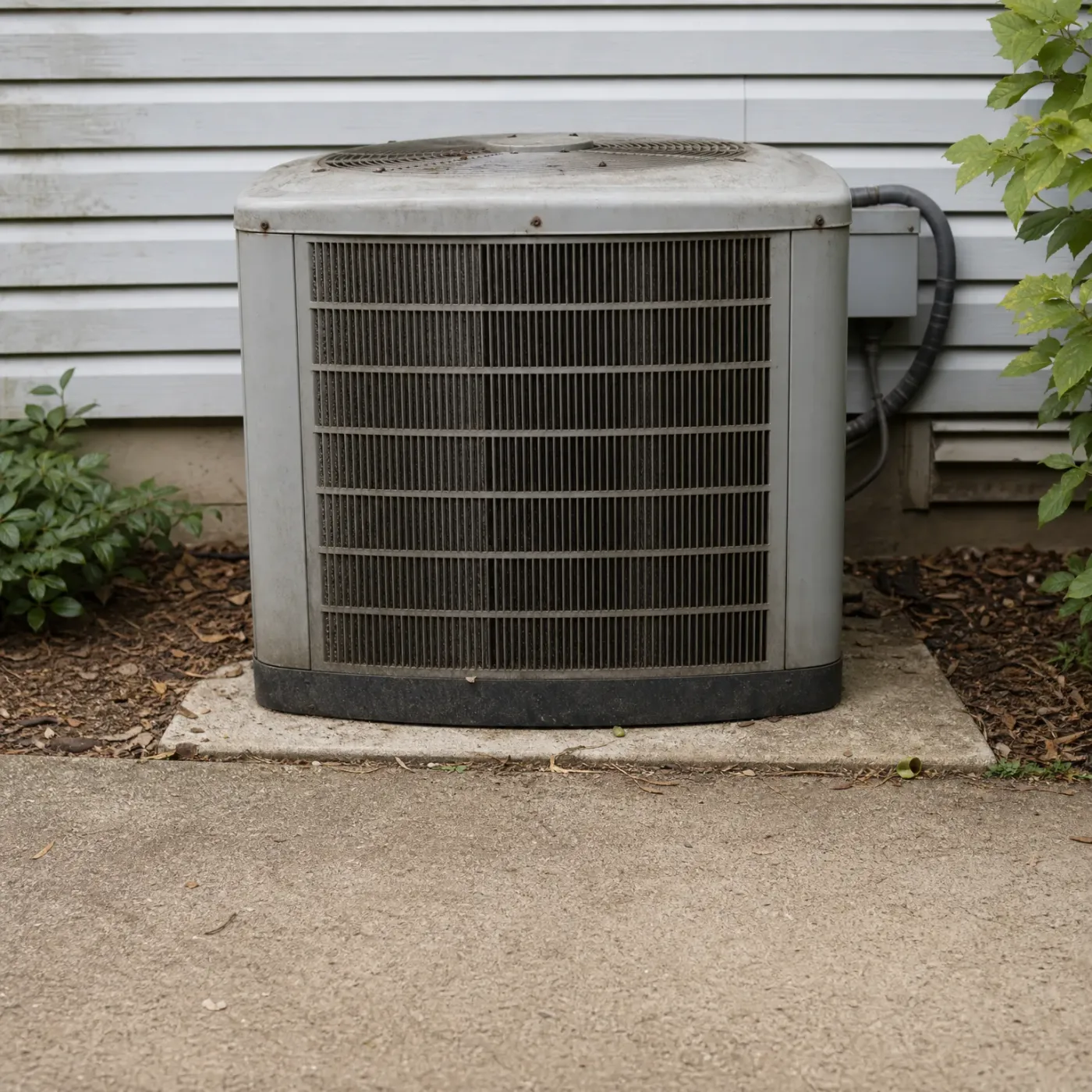
An outdoor air conditioner condenser unit on a concrete pad beside a house with light gray horizontal siding, with mulch and green shrubs on either side and a concrete walkway in the foreground.
Weathering like this holds in heat around the motor, and grime packed into the fins is a common reason units start to smell hot by mid-summer.

Call Someone or Watch It

Call someone now

  • A burning smell paired with a tripped breaker or a humming sound means a part is actively failing, not just dirty.
  • Shutting the system off at the thermostat and the breaker keeps a failing motor or wire from doing more damage before anyone looks at it.
  • A licensed tech who works on these units every summer can tell a melted wire insulation smell from a scorched motor bearing by sight.
  • If the smell comes back within a day or two of you noticing it, the part causing it is getting worse, not better.
  • Waiting through a Florida summer with a unit that smells like this risks the compressor or the blower motor failing outright in the heat.

Watch it for now

  • A faint burning smell that shows up once, right after the system kicks on, and then fades is often just dust burning off a coil or heating element.
  • If the smell doesn't return on the next cycle and the unit is cooling the way it always has, there's no sign of a part failing yet.
  • No breaker trip, no burning smell from the vents themselves, and no new noise from the condenser outside are all good signs.
  • Clearing debris or dust from around the outdoor unit and checking the filter is reasonable before assuming a part is bad.
  • Keep an eye on the next few cycles. If the smell shows up again or gets stronger, that's the point to stop watching and call someone qualified.
A single-story house with light gray horizontal siding, dark gray shingled gables, black shutters and a dark front door, fronted by a mulched bed of small shrubs and a large lawn under a clear blue sky.

Summer air here holds a dew point around 74°F, averaged across June, July and August by NOAA. That's heavy air, the kind that sits on you the moment you step outside. Your AC has to pull that moisture out before it can cool the room, which means the blower and fan motors run long stretches without a break, all summer, every summer. A motor that's already wearing out doesn't get much chance to cool down between cycles, and that's often when you start catching that burning smell from the vents. A contractor who works on AC units in this area every summer has seen which motors give out first under that kind of load, and knows what to check before it gets worse. Getting matched with someone local who already knows that pattern means you're not explaining your symptoms from scratch to several different companies.

NASA POWER T2MDEW county cells weighted by homes

A pro who works on air conditioners

A burning smell is not something to sit on, especially once a unit's been running flat out all summer the way yours has. Florida heat pushes a motor harder than most climates ever would, and a motor that's been straining for months doesn't fix itself. Someone who works on AC units in this state every season has seen that smell before and knows which part usually fails first in this heat, which matters more than a guess off a search result. Getting matched with a licensed contractor near you means someone familiar with how hard local systems run gets your request, not a call center reading from a script. One contractor, working from what you actually described, looking at your unit instead of a general case. With a smell like this, the part that's overheating isn't going to cool down on its own. The sooner someone who knows this equipment takes a look, the less chance it turns into a bigger repair.

If the smell comes back fast

Shutting the system off for a few minutes and turning it back on doesn't fix anything, it just stops the smell from reaching you. If it comes right back once the unit's running again, whatever's overheating is still overheating. A motor bearing that's worn won't cool down and start behaving. A wire insulation that's cracked from heat won't reseal itself. The only thing that changes is you've bought a little time before the breaker trips on its own or the motor seizes outright. In a lot of homes that means no AC for a stretch in weather that doesn't let up, since Florida summers don't give a system room to sit broken for long.

If it only happens on startup

A smell that shows up for the first minute or two after the unit kicks on, then clears, points to something different than one that lingers. Dust burning off a warm part is common after the system's been off a while, especially overnight with the thermostat set back. That's not nothing, but it's not the same urgency as a smell that holds steady while the system runs. Either way, the honest move is getting someone who works on these units through a full Florida summer to look at it and tell you which one you've got, rather than guessing based on how it smelled last Tuesday versus today.

Power costs 15.21 cents per kilowatt-hour statewide

At just over 15 cents a kilowatt-hour, running your AC here isn't cheap to begin with. A motor that's overheating and burning draws more power than one running clean, so that smell can be costing you on the bill before it ever fails outright.

EIA-861 2025 statewide residential average

A new capacitor or motor bearing smells like nothing at all. The part does its job quietly, the air comes out cool, and there's no reason to think about what's behind the vent.

A bearing or a winding that's worn starts to smell before it fails outright. By the time you catch it, the part has already been running hot for a while, and it won't go back to running cool on its own.

A weathered outdoor air conditioning condenser unit on a concrete pad beside a house with light horizontal siding, an electrical disconnect box and conduit on the wall, and mulched soil on either side.
Before you get your air conditioner repair
A gray outdoor air conditioner condenser unit on a concrete pad beside a house with horizontal vinyl siding, surrounded by mulch, flowering shrubs, and lawn.
After you get your air conditioner repair

Where That Smell Leaves You

  • A burning smell almost always means something electrical is overheating, usually a motor bearing or a capacitor, not the refrigerant.
  • A dusty smell that fades in a few minutes is normal when a unit kicks on after sitting idle.
  • A smell that holds steady, or shows up with a tripped breaker or a humming sound, means a part is actively failing.
  • Months of running hard in Florida heat wear down a motor faster than it would in a cooler climate.
  • Shutting the system off at the thermostat and the breaker stops the damage but doesn't fix what's overheating.
  • A unit that's overheating is already drawing more power than one running clean, so the smell costs you before it fails outright.

A burning smell from your AC comes down to one of two things. Either it's dust burning off a part that just started running, and it clears in a few minutes, or something electrical is actually overheating and it won't stop on its own. A motor bearing wearing out, a capacitor going bad, a wire somewhere taking more current than it should. None of that fixes itself, and none of it gets better by waiting through another hot afternoon. Your unit has already been running hard all summer, and a motor under that kind of strain for months wears faster than one that gets an easier season somewhere cooler. If the smell comes back every time the system runs, or shows up alongside a tripped breaker or a humming sound, that's a part failing, not dust settling. Shutting the system off at the thermostat and the breaker is the right move in that moment. It stops a failing part from doing more damage, and it gets the smell out of your house while you figure out next steps. But it doesn't repair anything. The part that's overheating is still worn down when the power comes back on. And it's already pulling more electricity than it would running clean, so it's adding to your bill before it ever quits on you outright. Knowing which kind of smell you've got tells you how much time you have. It doesn't change what fixes it.

A woman with shoulder-length dark brown hair in a cream knit cardigan sits in an upholstered armchair beside a window, looking off to the side, with a white bookshelf and potted plant blurred behind her.
A woman with dark hair in a bun sits wrapped in a chunky knit blanket on a couch with a child resting his head on her shoulder, eyes closed, beside a lit lamp and bookshelf indoors.

Get your air conditioner to the right pro

A burning smell means a motor bearing, capacitor, or wiring is overheating, and it won't fix itself with a Florida summer still pushing your AC this hard. Getting it checked means matching you with a licensed contractor near you, one who works on this equipment all season and knows what usually gives out first. You'll hear from that one contractor directly, not a handful of different companies calling about the same job.

Get a licensed local pro

Your request goes to one pro, not a list of companies.

Asking costs nothing, and the choice to hire stays yours.