

Why your AC compressor won't kick on in Florida

Skip searching for an air conditioner pro and answer a few questions instead.

Skip the calls

A compressor that won't start is usually the outdoor unit failing to get power, or getting power and still not turning. A tripped breaker or a blown fuse cuts power outright, and in Florida, where the outdoor unit runs hard for months at a stretch, that happens more than in places where it gets to rest. If power is reaching it, the problem is often a failed capacitor, which gives the compressor the jolt it needs to start, or a bad contactor, the switch that sends it power in the first place. Low refrigerant can also keep it from engaging, since the system is built not to run the compressor dry. Whatever the cause, the fan on top may still spin while the compressor stays silent, which is why the unit can sound like it's working when it isn't cooling anything at all.

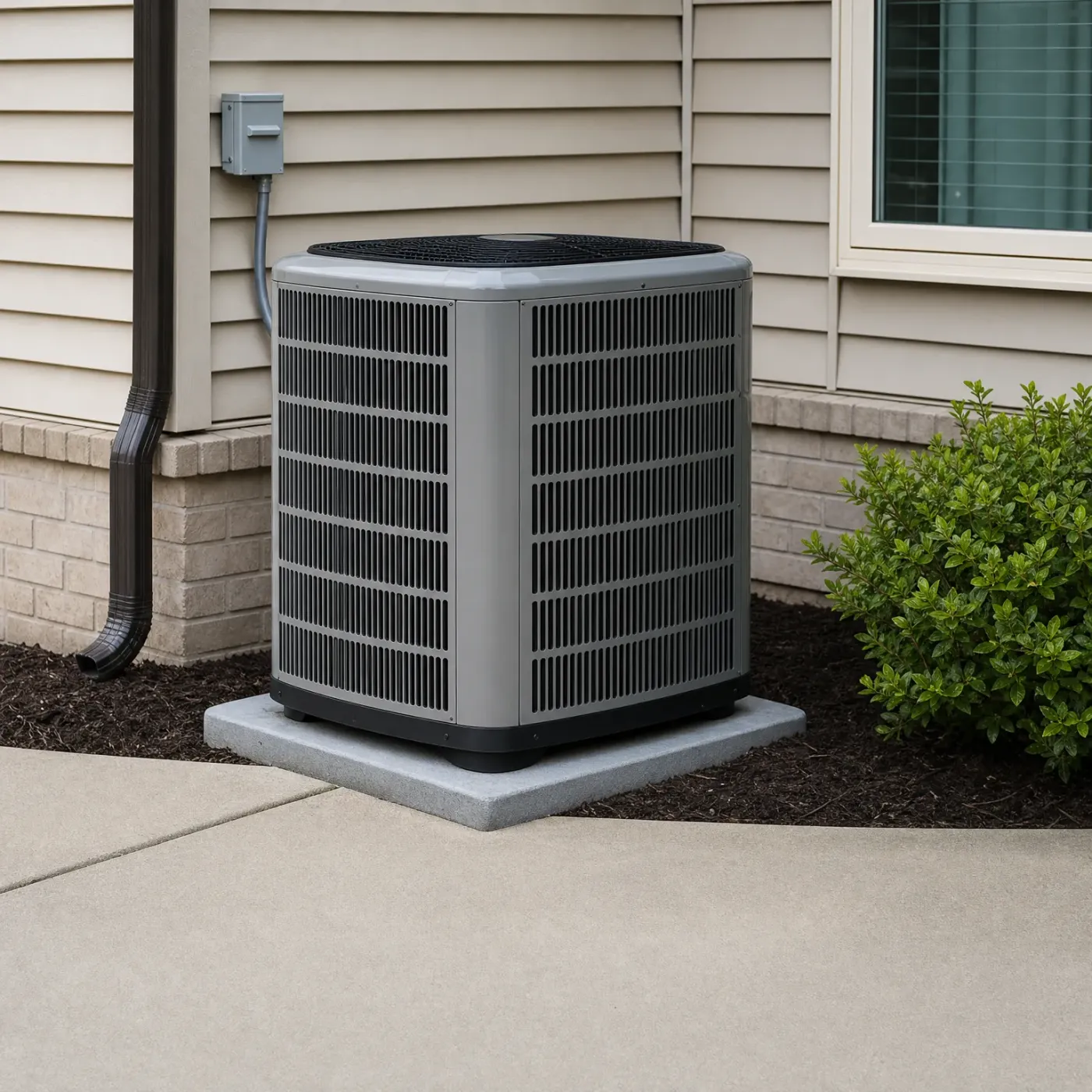
A gray outdoor air conditioning condenser unit on a concrete pad beside a house with horizontal vinyl siding, a brick foundation, downspout, electrical disconnect box, mulch bed and a green shrub.

Compressor kicking on

The outdoor unit hums within a few seconds of the thermostat calling for cool. The fan spins, the lines sweat, and air moves steady from the vents inside. Nothing hesitates, nothing clicks and stops. This is what the unit should be doing most of the day from April through October.
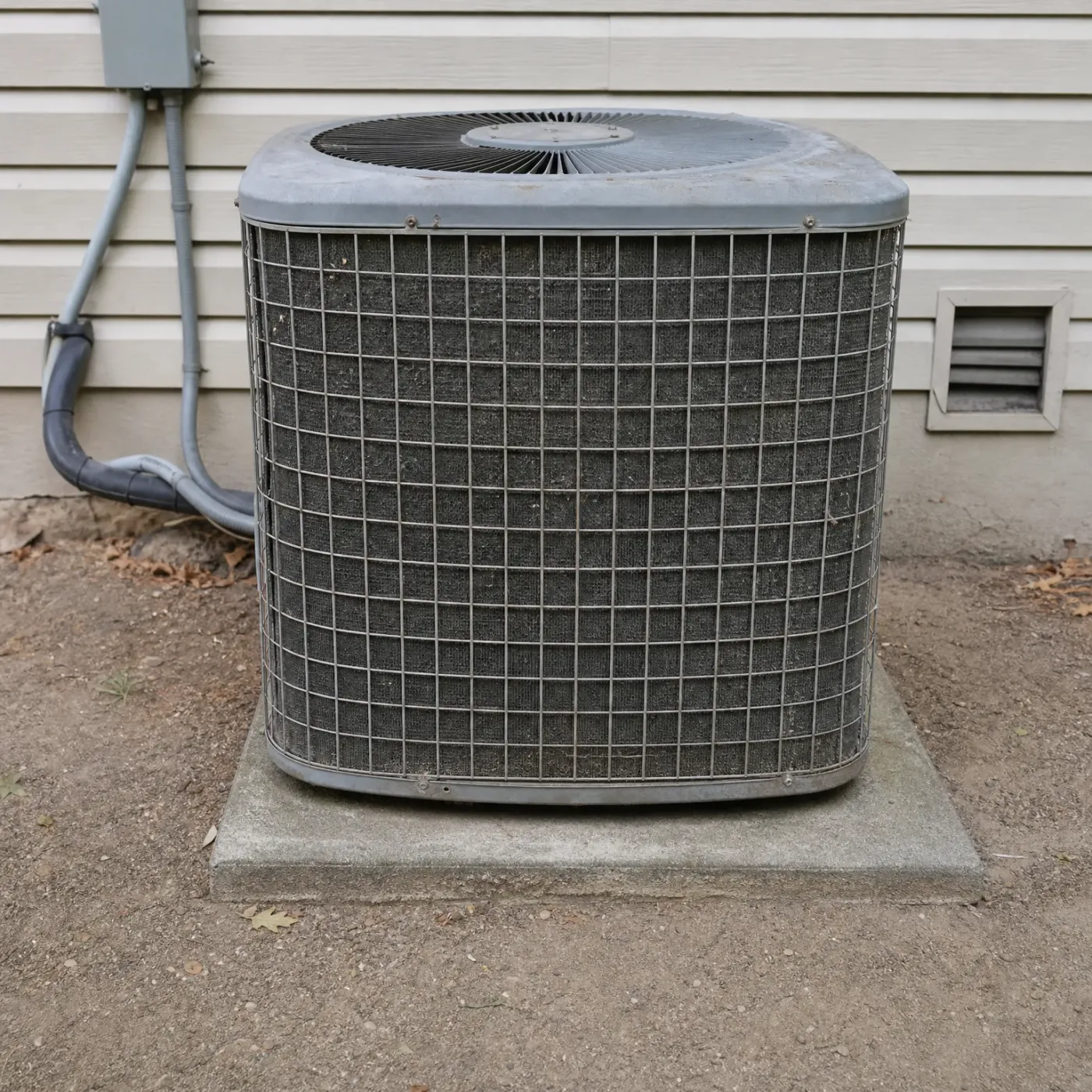
An outdoor air conditioning condenser unit with a dirty mesh coil guard sits on a concrete pad beside a house with horizontal lap siding, a wall vent, and conduit running to an electrical disconnect box.

Compressor staying silent

The fan might spin, but the compressor itself stays quiet, or it clicks once and shuts off. No hum, no vibration from the cabinet, no cool air inside no matter how long you wait. Grime packed into the fins and grille like this cuts off the airflow the unit needs to run at all, and it's often part of why the compressor won't start.

What are you noticing at your house right now

The thermostat is set low and nothing changes. You walk outside and the unit sits quiet, no hum, no fan turning, maybe a faint click when the system calls and then silence. Or it hums steady without the fan ever starting, which feels like progress but isn't cooling anyone. Inside, the air coming from the vents is room temperature or close to it, and the house is holding its heat instead of losing it. If this runs on through the afternoon, the rooms where your family spends time keep climbing, and in Florida that climb doesn't stop on its own once the sun's up.

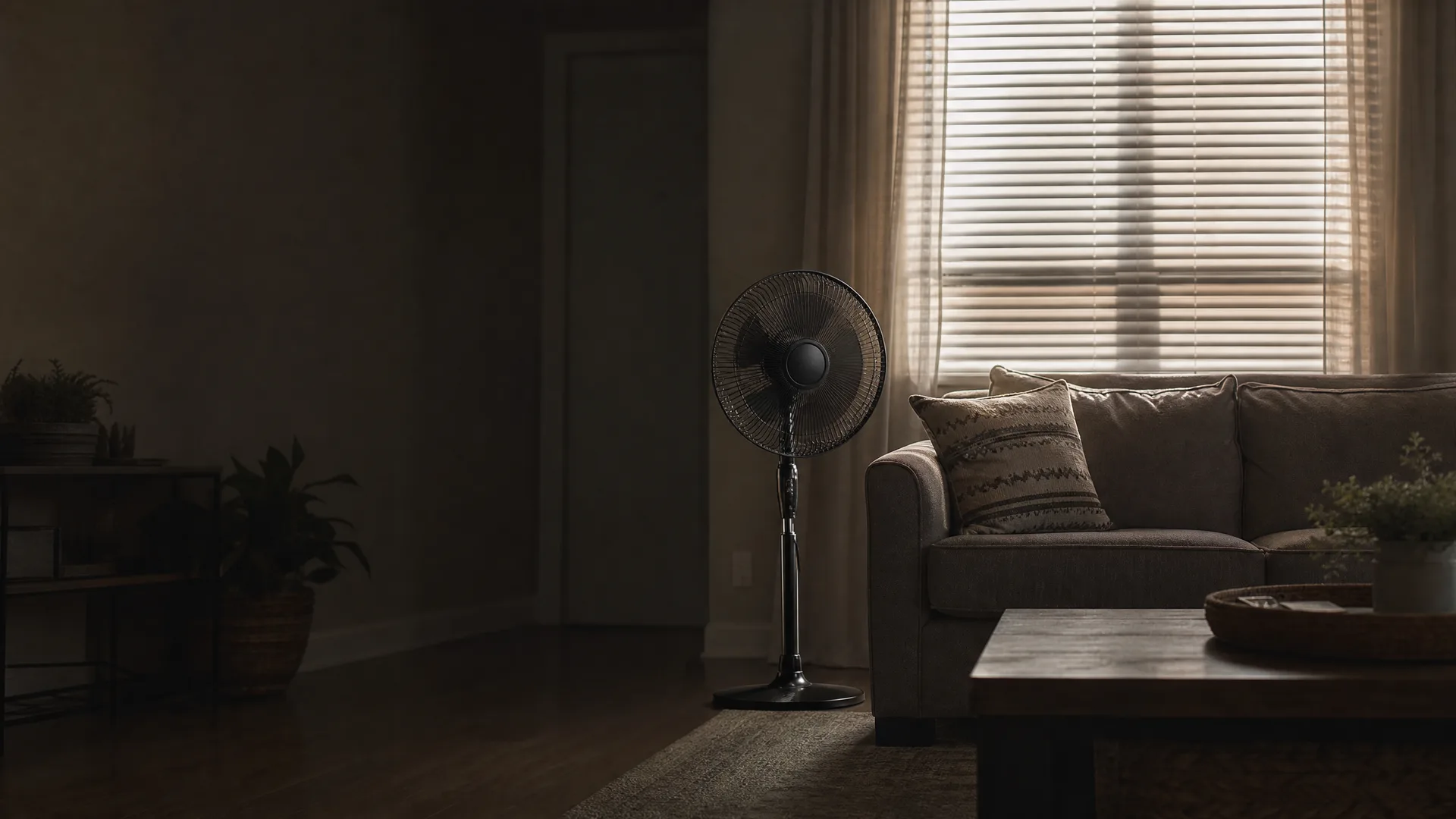
A dimly lit living room with a black pedestal fan on a wood floor beside a gray sofa with a patterned pillow, a wooden coffee table in the foreground, potted plants at left, and a curtained window with blinds behind.

By mid-afternoon the blinds are drawn against the sun and the floor fan is running next to the couch, turned up as high as it goes. You've already checked the thermostat twice. It still reads four degrees above where you set it. The outdoor unit by the side of the house is quiet, no hum, no sweat on the lines. Inside, the air from the vents has gone warm and still. You keep the blinds shut to hold back the heat coming through the glass, and the fan just moves the same warm air around the room. Whoever's home with you is feeling it too, and the afternoon still has hours of sun left in it.

A closed silver laptop and a glazed ceramic mug on a wooden table, with a blurred kitchen counter, potted plant, cutting board and window in the background.

What has to happen before that compressor turns on

The thermostat calls for cool, and that signal has to reach a contactor in the outdoor unit, a switch that closes to send power to the compressor and the fan. If the contactor's coil is weak or its contacts are burned, the switch doesn't close all the way, and the compressor gets no power at all even though the breaker is fine and the thermostat is doing its job. A capacitor sits right next to it, and its job is to give the compressor motor the jolt it needs to start turning against the pressure already in the lines. A capacitor that's lost its charge over a summer of hard running can leave the fan spinning while the compressor just sits there, or cause the whole unit to hum and shut back off within a few seconds. Both parts are small, and both fail quietly, with no warning before the day they don't work.

Figuring out which one it is from the driveway isn't something most homeowners can do, and it's not supposed to be. A contractor who services this equipment in Florida every summer can usually tell by the sound the unit makes, or doesn't make, before touching anything. Finding that contractor is the part that takes time: searching, calling a few numbers, describing the same hum or the same silence over and over, then waiting on quotes to compare. This page connects you with one licensed, local contractor instead, someone who already knows what tends to go first on a unit that's been running since April.

Interior corner of a living room with a beige upholstered sofa and dark cushion in the foreground, a ceramic vase of leafy branches on a dark side table by a curtained window, a framed picture on the wall, and a wood-surround fireplace at right.

Power costs 15.21 cents per kilowatt-hour statewide

At 15.21 cents per kilowatt-hour, a compressor that short-cycles or strains to start runs up your bill fast, since it's drawing power trying and failing instead of just cooling. A stuck or struggling compressor is one of the more expensive things to ignore.

EIA-861 2025 statewide residential average

A woman with long light-brown hair in a gray knit sweater sits in a living room looking off to the side, with a sectional sofa, houseplant, lamp, wooden table and large windows behind her.
A woman in a chunky gray turtleneck sweater sits indoors looking off to the side, with a blurred dining table, chairs, pendant lamp and window behind her.
A woman in a cream knit sweater with her hair in a bun stands near a window, looking off to the side, with a gray sofa, houseplant and open kitchen with pendant lights blurred behind her.
A woman with long brown hair in a cream knit sweater stands near a window, looking to the side, with a white sofa, shelving, and a hallway visible behind her.

Explain it one time

A compressor that won't start isn't something to leave alone while you work the phones. You'd be calling around for a contractor who can look at it soon, explaining the humming or the silence to each one, then waiting on quotes to compare while the house sits at four degrees over. Sending the request here puts it in front of one licensed contractor working near you, someone who's out checking contactors and capacitors on units like yours all summer and knows what Florida heat does to them after a few seasons of running hard. You're not fielding calls from five different companies or repeating the same story twice. One contractor gets it, already knowing the kind of failure that's common in this climate and what to check first. That's the part worth handing off. The heat outside isn't waiting, and neither is the guesswork about who to call.

What this comes down to

  • A compressor that stays silent or hums without starting almost always comes down to power not reaching it or a part inside failing to respond to it.
  • A tripped breaker, a bad capacitor, a worn contactor, or a compressor winding that's given out are the likely causes once you've ruled out the thermostat.
  • Running the system while it hums and strains instead of shutting it off can turn a capacitor or contactor problem into a damaged compressor.
  • A contractor who services AC units across Florida all summer has seen this exact failure many times and knows where to check first.
  • One licensed, local contractor takes the call, looks at your unit, and tells you what's wrong, instead of you fielding calls from several companies.
  • Whatever's keeping your compressor quiet, it's a known fault with a known fix, not a mystery you have to solve yourself.

A silent or humming compressor is a power problem or a part that failed to respond to power. That's the whole range of it. The breaker, the capacitor, the contactor, or the compressor itself. None of those are mysteries to someone who works on these units through a Florida summer, when outdoor units run for hours at a stretch and these exact parts give out in the same order they always have. The contactor's contacts burn and stop closing. The capacitor loses its charge and can't push the compressor into motion. The breaker trips because the compressor is pulling more than it should on a bad start. A contractor who sees this across Florida all season knows which of those to check first and checks it fast, because the pattern is familiar even when your unit isn't.

What you get is one person looking at your specific unit, not three or four companies working from your description over the phone. That matters here because the wrong guess costs you time in a house that's already warm, and because a unit left running while it strains can turn a cheap part into an expensive one. A local contractor knows that too, and knows not to let a humming compressor run any longer than it has to.

You don't need to know which of these it is before you call. You need someone who can look at the unit, find out which part failed, and get your compressor turning again.

A modern two-story house with dark siding and stone base at dusk, with lit soffit lights, a path of large rectangular pavers set in dark gravel, planting beds, a lawn, and an orange and blue sunset sky above distant trees and water.

Air Conditioner Repair

Skip the calls to every shop

Step 1 of 3: Equipment
  • A cream chunky cable-knit throw draped over a beige upholstered armchair beside a bright window, with a wooden side table holding a book and a vase of leafy branches at left.
    • Tell a local repair pro what your air conditioner is doing.
    • A local pro who knows air conditioners gets your details and gets in touch.
  • Living room corner with a gray sofa holding beige pillows and a knit throw, a round wooden coffee table with a dark planter and shallow bowl, a jute rug, a floor lamp, a framed landscape print on the wall, and a window showing trees.
    • After this form, you can stop searching for an air conditioner pro.
    • One request and the search for a pro is handled.
  • A living room corner with a cream sofa and cushion, knit throw, wooden coffee table holding a shallow bowl and dark ceramic vase with green foliage, a floor lamp, potted plant in a woven basket, and linen curtains at a window.
    • Answer a few questions instead of calling shop after shop.
    • Describe your air conditioner job once, to one pro.
  • A round reclaimed-wood coffee table with a black metal base sits on a woven rug in front of a cream sofa with cushions, with a lit built-in fireplace and a tall indoor tree in the background.
    • Your request goes to one pro, not a list of companies.
    • The pro who reaches out is licensed in Florida.