





Profile view of a bearded man wearing a black baseball cap and a dark gray T-shirt against a plain light background.

Central AC or mini split for a Florida home

Step 1 of 3: Equipment

Both can cool a Florida home well, so the choice usually comes down to what you have now and what you're adding on to. If ductwork is already in place and in good shape, central AC keeps the whole house at one temperature with no unit on the wall, and it's the simpler swap when you're replacing a system that's already there. A mini split earns its keep where ducts don't reach, a garage turned into a bedroom, a sunroom, an addition, or a house that never had ducts to begin with. It also lets you cool one room without running the rest of the house, which matters in a Florida summer when the bedrooms need to stay cold at night but the rest of the house doesn't. Most homes here heat with electric strip heat or a heat pump, and a mini split handles both jobs in one unit. The right call depends on your layout more than your preference.

A woman and a child wrapped together in a knitted gray blanket on a couch, with the child's head resting on her shoulder and a lit table lamp and houseplant in the background.
A smiling older woman with gray hair in a cream knit sweater stands in a dimly lit kitchen beside a window showing snow outside, with a round loaf of bread on the counter in the foreground.

Central AC works off one coil. Warm, humid air from the whole house gets pulled across it, and the moisture drops out before the cooled air gets pushed back through the ducts to every room. That's efficient when the ducts are sized right and sealed well, but every foot of duct run through an attic is a chance for some of that cooled air to leak out before it reaches the vent. A mini split skips the ducts. Each indoor head has its own small compressor outside, so it cools the room it's in directly, no duct losses. That also means you can run one head in a bedroom overnight without cooling an empty living room. If you're putting more than one head on a single outdoor condenser, each one can be set to its own temperature. Central air can't split a house that way. It conditions everything on the same loop to the same setting. Installing a mini split head is simple on the wall side, a small hole for the line set and a mounting bracket is most of it. Central air depends on what's already behind your walls.

How each system actually cools

  • Central AC pulls heat and moisture out through one coil and pushes cooled air through the same ducts to every room.
  • A mini split has its own compressor for each indoor head, so it can run one room cold without cooling rooms nobody's using.
  • Ducts lose some cooled air through the walls and attic before it reaches the vent, a mini split sends air straight from the unit into the room.
  • Central AC needs a return air path and supply runs already sized right, or it will struggle to pull humidity out of the air.
  • A mini split's indoor head mounts high on a wall or ceiling and needs a small hole drilled through for the line set, nothing more.
  • Multiple mini split heads on one outdoor condenser can each be set to a different temperature, something a single central system can't do room by room.
A woman in a knitted shawl sits in a living room with a fireplace, shelves, a sofa with cushions, and a lamp by a bright window, looking off to the side.
A woman with long brown wavy hair in a green shirt over a white top stands in a living room with built-in white shelves, a ceiling fan, a potted plant and a sliding glass door.
A woman with shoulder-length gray-streaked hair in a light gray knit sweater stands smiling and looking off to the side in a living room with a sofa, houseplant, framed picture, and sunlit sliding glass door.
A woman with shoulder-length curly gray hair wearing a gray knit sweater stands near a window with a sheer curtain, looking to the side, with a blurred interior room behind her.

When central AC makes sense

If your ductwork is already there and sealed up well, central AC is usually the simpler install. One system, one thermostat, no units mounted on the walls. It works best in a house where every room gets used and you want the whole place at one temperature. If your ducts run through the attic, have a contractor check them before you install, since leaks there will cost you cooling before it ever reaches a vent.
When a mini split makes sense

A mini split skips ductwork entirely, so it fits a room addition, a garage, or a house that never had ducts to begin with. Each head has its own compressor, so a guest room that sits empty most of the year isn't cooled on the same schedule as the rest of the house. That's worth something in Florida, where a room you only open up on weekends doesn't need to run at the same temperature as the kitchen all week.

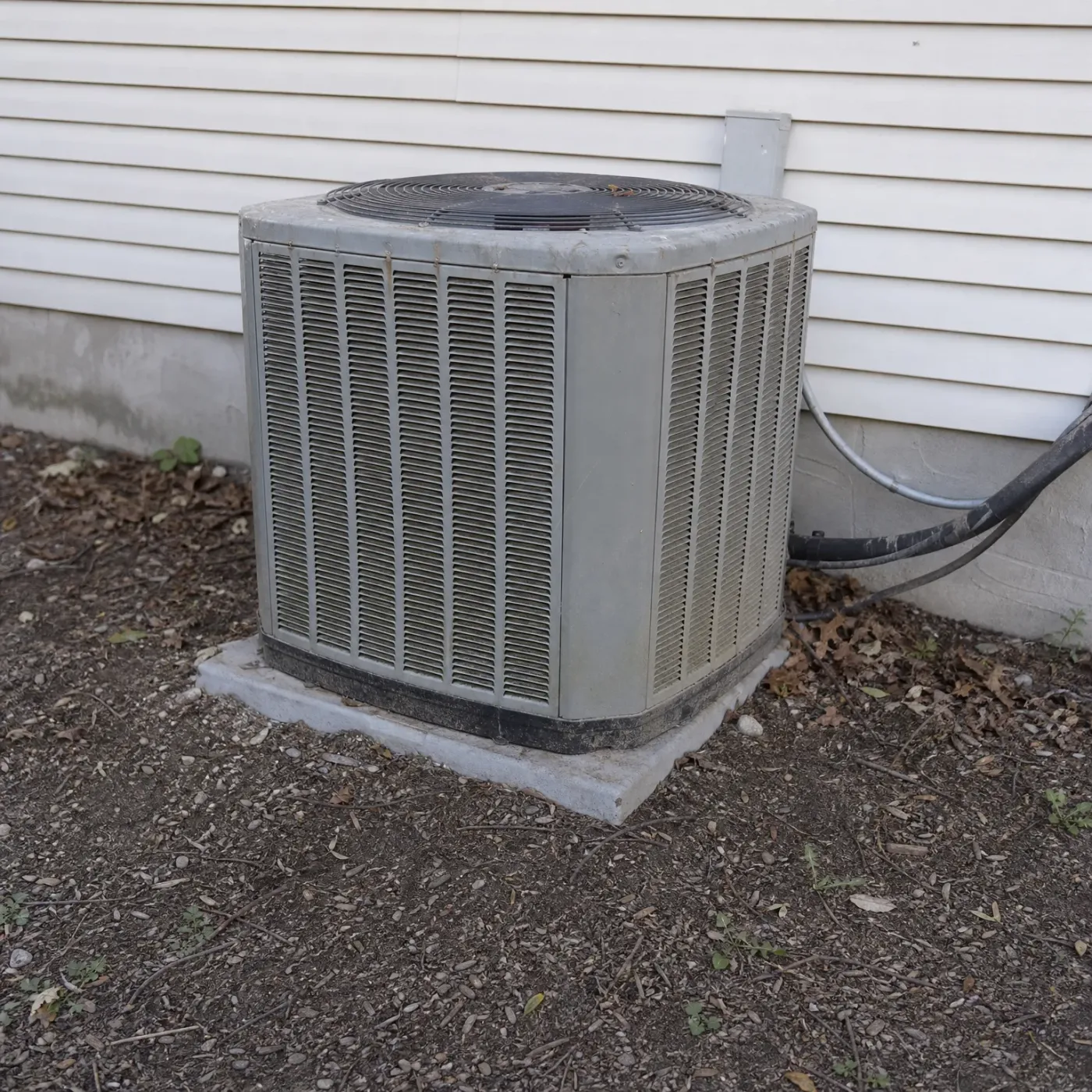
An outdoor air conditioner condenser unit on a concrete pad beside a house with light horizontal vinyl siding, surrounded by bare dirt, gravel and dry leaves, with refrigerant lines and conduit running along the wall.
Before you get your air conditioner installation
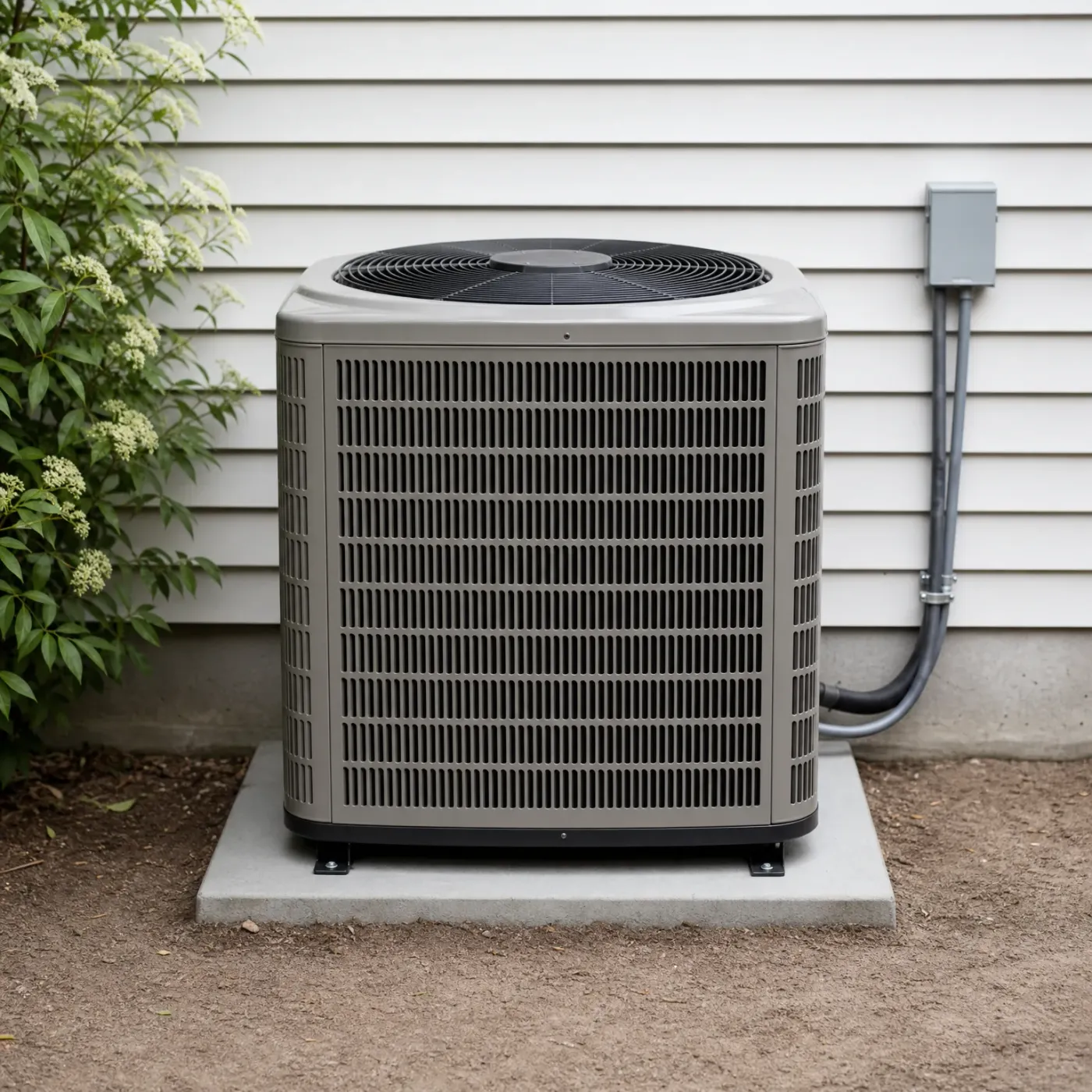
A gray outdoor air conditioner condenser unit on a concrete pad beside a house with horizontal lap siding, with a flowering shrub at left and a disconnect box with conduit on the wall at right.
After you get your air conditioner installation

Let someone else find the pro

A Florida summer doesn't give a system much of a break, and a mismatch between your house and the equipment shows up fast, in rooms that never quite cool down or a power bill that doesn't match the comfort you're getting. Deciding between central AC and a mini split isn't something to work out alone from a search page. A local contractor who installs both every summer here knows which one fits your ductwork, your layout, and what tends to fail first in this climate. Send the request and a licensed contractor near you picks it up, the one who gets your job, not a handful of companies competing for it. From there it's off your plate. You stop weighing ductwork condition and SEER2 numbers against each other and get back to the parts of owning the house that aren't about guessing at HVAC specs.

An outdoor air conditioner condenser unit on a concrete pad beside a house wall, with a gray electrical disconnect box and conduit above it and grass in the foreground.

What a mismatch feels like at home

A central system pushing air through ducts that leak into the attic means the room farthest from the air handler stays warm while the thermostat says you're at temperature. A mini split sized for one room won't help the rest of the house, so the people in other rooms are the ones who feel it, especially on the hottest afternoons when the sun's been on the roof for hours.

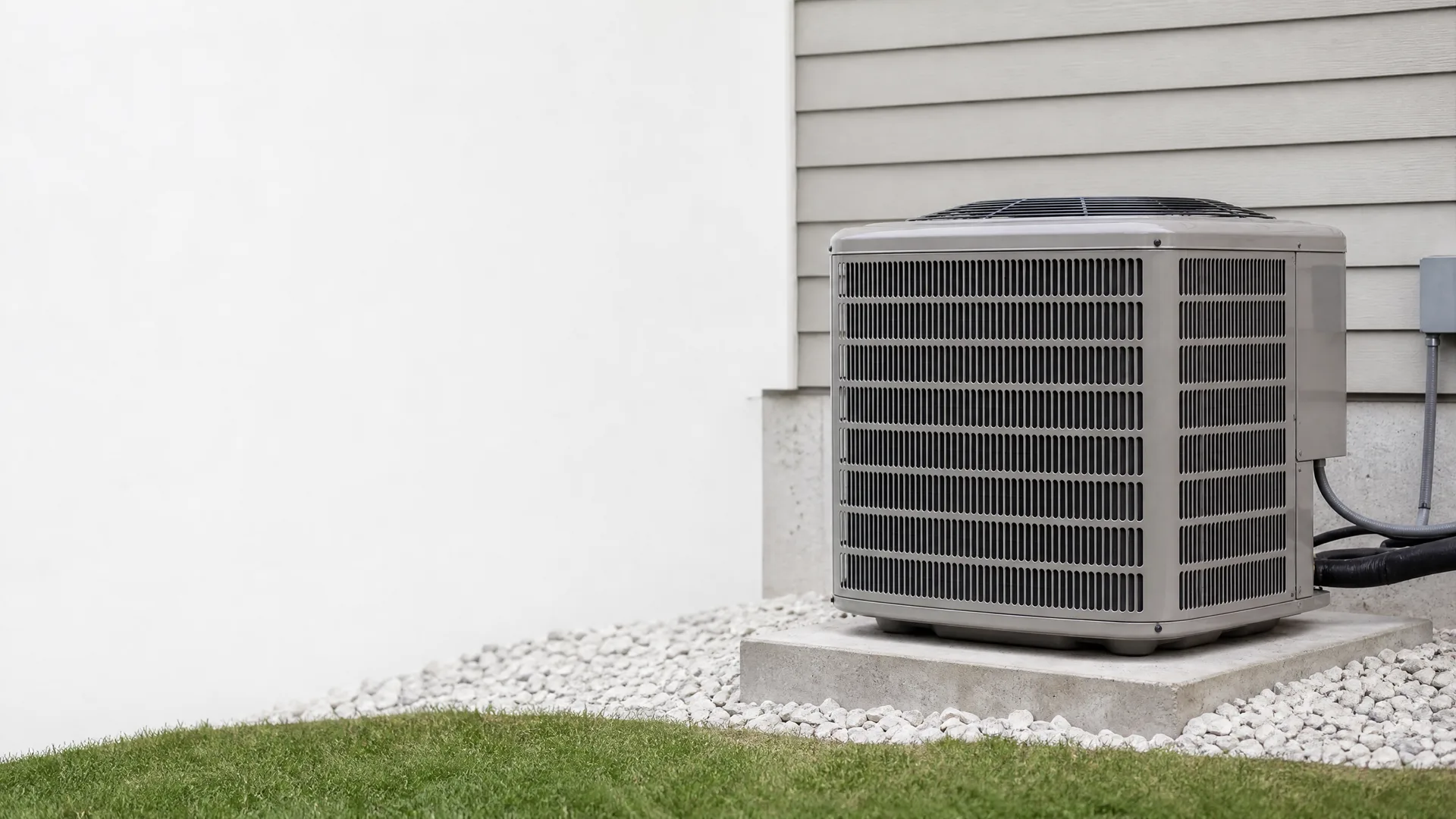
A gray outdoor air conditioner condenser unit on a concrete pad beside a house with horizontal lap siding, surrounded by white gravel and a lawn, with a white wall at left.

What it does to your bill

Humidity is what makes Florida heat feel worse, and a system that's wrong for your house works harder to wring it out of the air without ever catching up. Oversized equipment cycles on and off fast and leaves moisture behind each time it shuts off. Undersized equipment runs long stretches and still falls behind. Either way, you're paying for runtime that isn't buying you comfort.

Power costs 15.21 cents per kilowatt-hour statewide

At 15.21 cents per kilowatt-hour, every degree you push your thermostat down costs real money all summer long. A mini split that only cools the rooms you're using can hold down the bill compared to central air working to chill the whole house, especially if some of those rooms sit empty most of the day.

EIA-861 2025 statewide residential average

Which System Fits Your House

  • Central AC and mini splits both hold a Florida home at temperature; the right one depends on your ductwork and how you use the rooms.
  • A house with sound ducts and every room in regular use usually does better with central AC and one thermostat.
  • A home with no ducts, an add-on room, or rooms that sit empty most days usually does better with a mini split.
  • A local contractor who installs both systems in this climate all summer can tell you which one fits your house after walking through it.
  • Sending one request means one contractor looks at your situation, not a handful of companies competing for the job.
  • Getting the match right the first time matters more here than most places, since a mismatched system runs hard almost year round.

The answer isn't one system or the other. It's what your house already has. Sound ductwork and rooms that all get used point toward central AC. No ducts, a room that was added on later, or space that sits empty most of the day points toward a mini split. Either one will keep a Florida home comfortable through the summer when it's sized and installed right for the house it's going into.

That last part is where a local contractor earns their keep. Someone who installs both systems through summer after summer here knows what tends to go wrong with each one in this climate, whether that's ducts leaking into a hot attic or a mini split head sized wrong for the room it's cooling. Walking through your house, they can tell you which setup fits what you've already got, rather than you guessing from a list of pros and cons.

Send one request and it goes to one contractor, licensed and local, not a handful of companies calling you back at once. That contractor already knows the equipment and the climate, so the visit is about your house, not a sales pitch for one system over the other. Getting this decision right matters more here than in places where the system gets a break for half the year. In Florida it doesn't, and a system that's a poor fit for your house will run hard for months before anyone notices the bill or the room that never quite cools. Once you send the request, finding the right person for the job isn't something you have to manage anymore.

Sunlit corner of a room with a wooden sideboard holding a ceramic vase of olive branches and a dark wooden bowl, beside a white-framed window, a hardwood floor and woven rug.
A wooden cabinet holding a pale ceramic vase with leafy branches stands beside a beige wall in a sunlit room with hardwood floors, a jute rug, and a window showing green foliage outside.
Sunlit room corner with a beige upholstered sofa holding a rust-brown cushion, beside floor-length linen curtains at a window, over a wood floor with a woven rug.
Corner of a room with beige walls, a framed photograph, a floor-length linen curtain beside a window, an upholstered armchair with a knit pillow, white baseboards and trim, wood flooring and a pale rug.
Sunlit living room corner with a beige upholstered armchair with a cushion, linen curtains beside a wooden-framed window, green vertical panelled wall with a framed print, and a wooden table edge over a woven rug.

One request and it's handed off

Only one pro gets your request, so you hear from one company.

Hand it over

There's no charge for the request.