
AC tune-up before summer in Tampa, FL

Your air conditioner tune-up request goes to a pro who covers Hillsborough County.

Get my match

When should I get my AC tuned up before summer in Tampa?

You feel the first warm stretch coming on and you want to get ahead of it this year instead of waiting for the first hot day to find out your AC has a problem. You don't want to pay for emergency service in July when a technician could have caught the same issue in a slower month for less hassle.

Get it done in February or March, before the heat sets in

Schedule the tune-up in February or March, ahead of the heat. Your AC has likely sat through a mild Tampa winter barely running, and small problems like a dirty coil or a low refrigerant charge don't show up until the unit has to work hard. Once temperatures climb into the 90s and humidity sets in for the summer, every AC in Hillsborough County is running most of the day, and contractors are booked solid. A tune-up done early gets a technician out on a normal schedule instead of an emergency one, and catches a weak part before it fails on the first truly hot week.

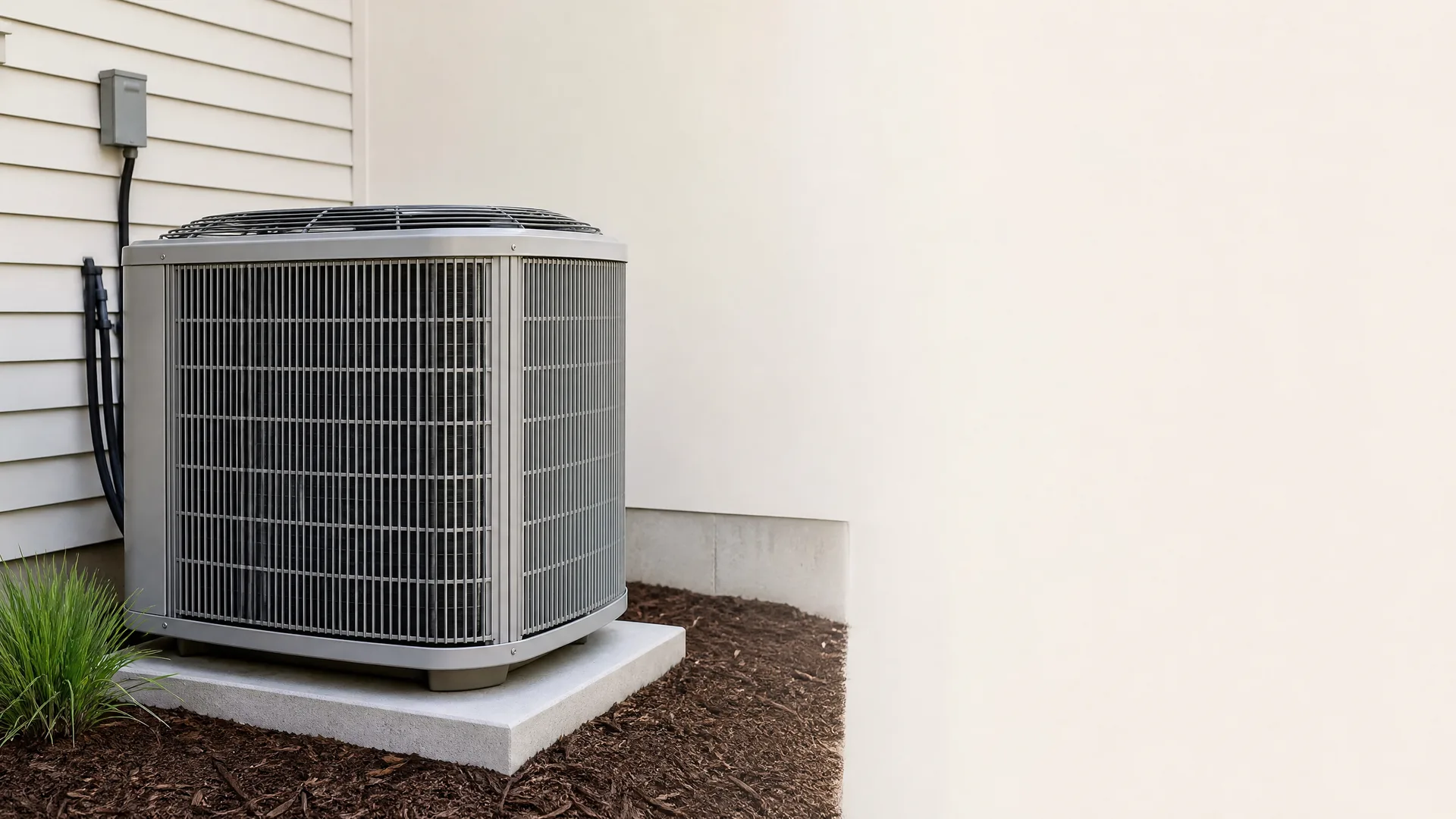
An outdoor air conditioner condenser unit on a concrete pad beside a house with beige horizontal siding and a stone-veneer base, with refrigerant lines running to a gray wall-mounted electrical box, surrounded by dark mulch, a flowering shrub and an evergreen on the left.

What a tuned-up unit looks like

The condenser sits outside on its pad, coils clean, fan turning freely, running quiet. It cycles on, cools the house, and shuts off without strain. Nothing around it is blocking airflow, and the disconnect box next to it stays untouched between visits.
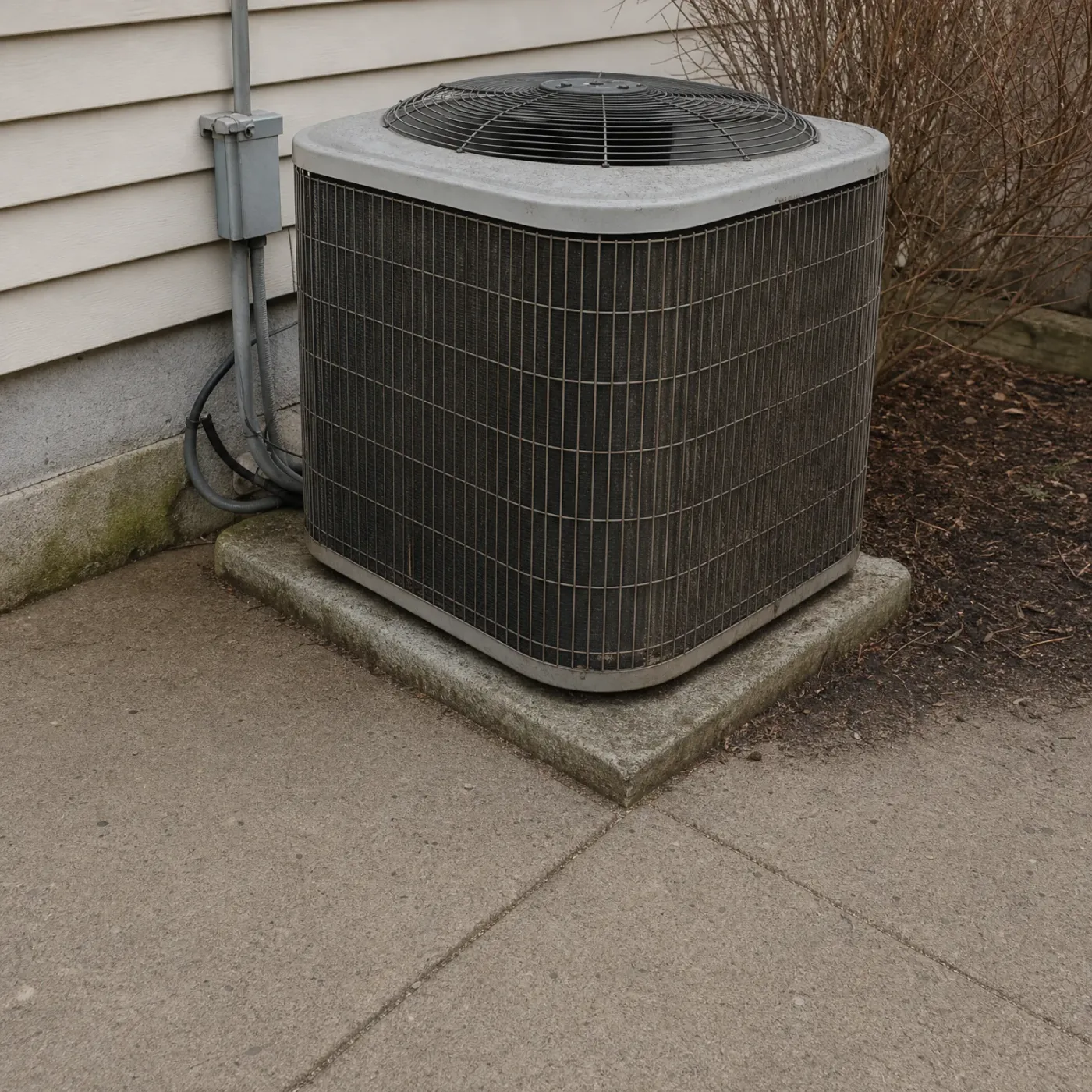

An outdoor air conditioning condenser unit on a concrete pad beside a house with light vinyl siding, an electrical disconnect box and conduit on the wall, bare shrubs and mulch to the right, and a concrete walkway in the foreground.

What a struggling unit looks like

The condenser still turns on, but it runs longer to do the same job. Coils caked with pollen or grass clippings make it work harder to move heat outside. Left alone through a Tampa summer, that strain is what leads to a breakdown on the hottest day of the year.

Tune It Up Now or Risk July

Tune-up now

  • A contractor can still get out to your house on a schedule that works for you, not whoever has the next opening in July.
  • The coils, the refrigerant charge and the electrical connections all get checked while the unit is only working against mild spring air, not 95 degrees.
  • Dirt and a weak capacitor get caught before they turn into a compressor working harder than it should all summer.
  • If a part needs ordering, there's time for that to happen before the house actually needs the cooling.
  • A unit that's been checked over starts summer already running the way it's supposed to, instead of you finding out otherwise in June.

Wait and see

  • The unit keeps running exactly as it has been, which is fine if nothing was wrong with it to begin with.
  • Once the heat sets in, every AC in Hillsborough County is working its hardest at the same time, and so is everyone else's contractor.
  • A small problem, a dirty coil or a low charge, doesn't announce itself, it just means the unit runs longer and the power bill runs higher.
  • If something does fail in August, it fails while the house needs it most and while finding a contractor takes longer.
  • Nothing gets caught early, so whatever was already wearing on the unit keeps wearing on it through the hottest months.
An older man with gray hair and a beard, wearing a dark coat dusted with snow, stands smiling in a doorway of a warmly lit home with a sofa, lamp and window visible behind him.
An older man with grey hair and a beard, wearing a dark coat dusted with snow, stands in a dimly lit entryway with a ceiling lamp, a side table with two shaded lamps, and a lit fireplace visible in a room beyond.
A bearded older man in a dark snow-dusted coat and scarf stands just inside a home's front door, with a lamp-lit room and snowy window visible behind him.
An older man with gray hair and a beard stands in a doorway of a home, wearing a dark coat dusted with snow, with a lit fireplace and lamp visible in the blurred room behind him.

Is your AC already struggling to keep up?

Walk through your house in the afternoon. Does one room stay warmer than the rest, or does the air coming out of the vents feel weaker than it used to? Listen to the condenser outside. A unit that's lost its edge often runs longer to hit the same temperature, cycling on and off more than it should, or making a rattle or hum that wasn't there last year. Check the thermostat against how the house actually feels. If it says 72 and you're still sweating, the unit is working harder than it's built for. Left alone through a Tampa summer, that strain tends to end in a breakdown on the hottest day, not the mildest one, and a bill that's crept up without anyone noticing.

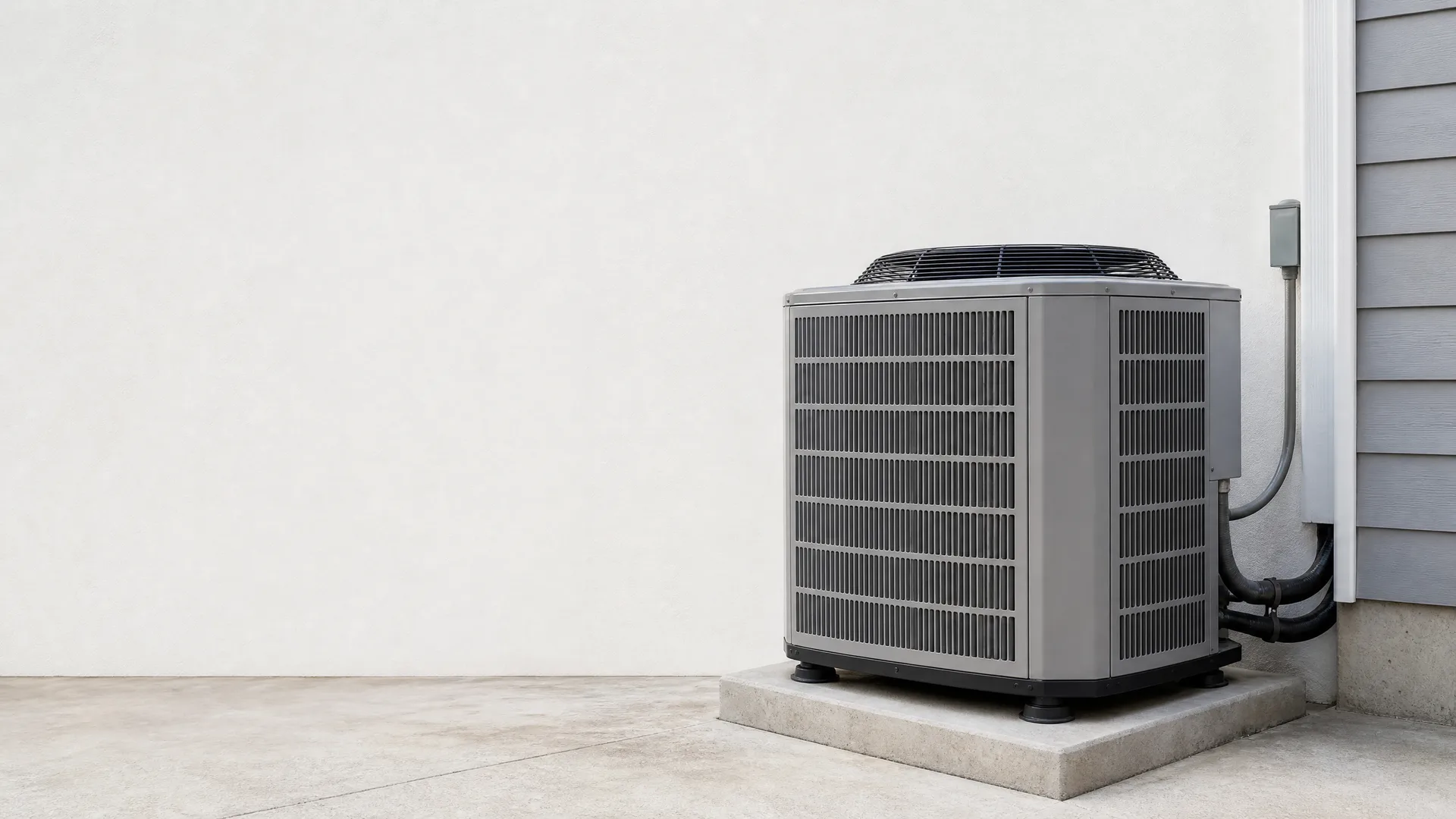
An outdoor air conditioner condenser unit on a concrete pad beside a house with horizontal lap siding and a light stucco wall, surrounded by dark mulch and an ornamental grass.

What a contractor checks outside

The condenser coil gives up heat to the outside air, and it can only do that if air moves through it freely. A contractor washes the coil, straightens any bent fins, and confirms the fan motor spins at full speed. They also check the refrigerant charge against what the unit calls for. Too little and the system cools poorly while running longer than it should. Too much and the compressor works harder than it needs to, every single cycle.

An outdoor air conditioning condenser unit on a concrete pad beside a light stucco wall, with a disconnect box and refrigerant lines running to adjacent lap siding.

What gets checked inside the house

At the air handler, a contractor checks the blower motor and looks at the evaporator coil, which can grow mold or ice over if airflow is restricted. A dirty filter is the most common cause of that restriction, and it's worth checking monthly through a Tampa summer since the system runs so much. They'll also test the thermostat's calibration and look over the electrical connections, since a loose wire at the contactor is a common reason units fail on the hottest days.

Cooling runs March through November

Nine months a year is most of the year your AC is on. That's a long stretch for the coils and the electrical connections to run without a break, and a small problem left alone in March is a bigger one by July.

NOAA nClimDiv 1991-2020

Skip it this year

The unit might make it through summer fine. Plenty do, especially if last year's tune-up caught the small stuff. But you won't know about a weak capacitor or a dirty coil until the compressor is working harder in July heat, and that's when a small strain turns into a breakdown. If it fails on a 94 degree afternoon, you're calling around for whoever can fit you in, and the house sits hot and humid while you wait.

Get it checked now

A contractor looks at the unit while it's only running a few hours a day, not fighting the peak of summer. Anything found gets fixed on a schedule you pick, not an emergency one. The unit goes into the hot months with clean coils, the right refrigerant charge, and connections that have been checked. It still could fail later. Parts wear out. But you've taken the most common causes off the table before the heat makes them worse.

An outdoor air conditioner condenser unit on a concrete pad beside a house with light horizontal lap siding, with an electrical disconnect box and conduit on the wall behind it.
Before you get your air conditioner maintenance
An outdoor air conditioning condenser unit on a concrete pad beside a house with white horizontal lap siding, with an electrical disconnect box and insulated refrigerant line on the wall and a shrub over mulch to the right.
After you get your air conditioner maintenance

Get matched with an air conditioner pro in Hillsborough County

Send the form and the air conditioner tune-up stops being something to remember.

There's no charge for the request.

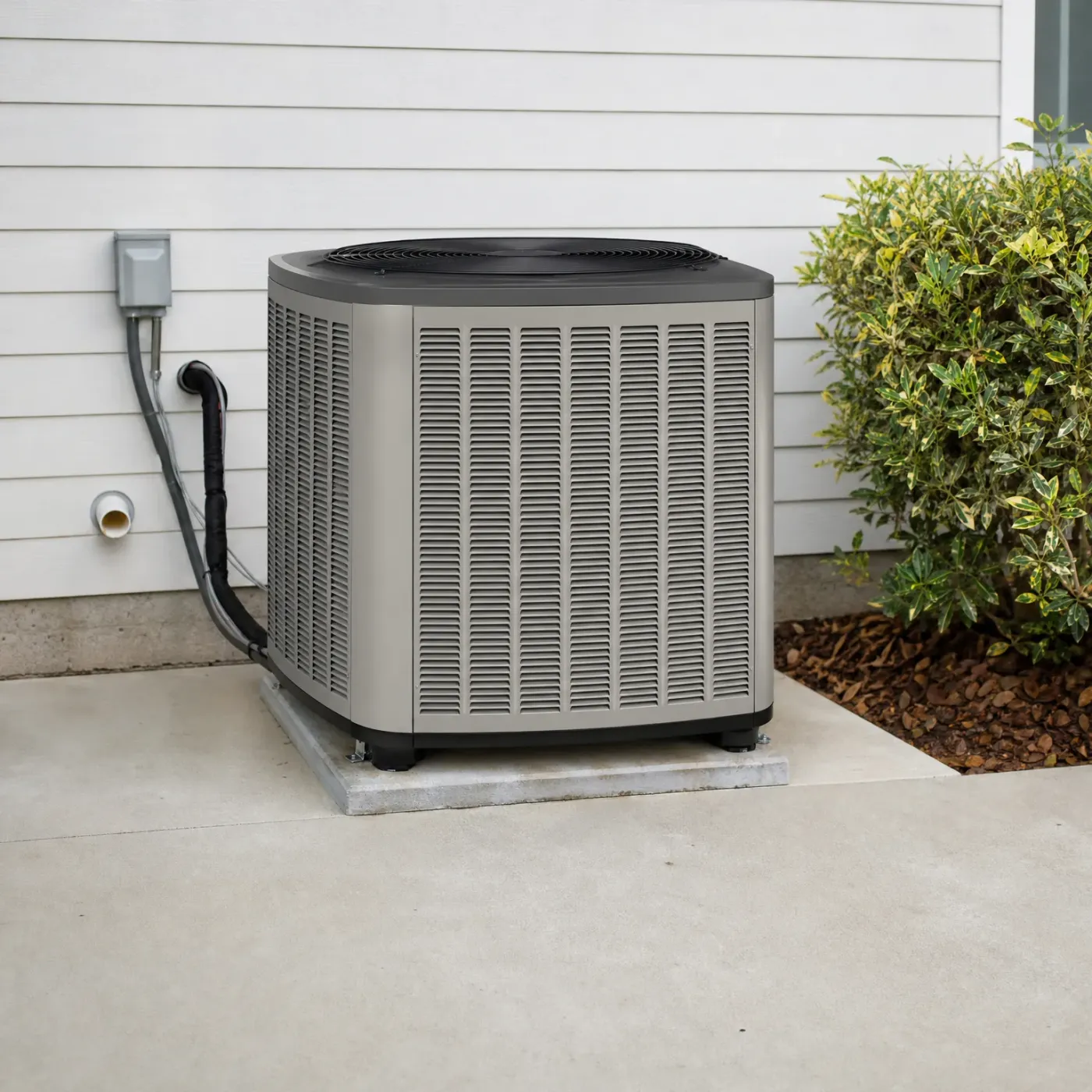
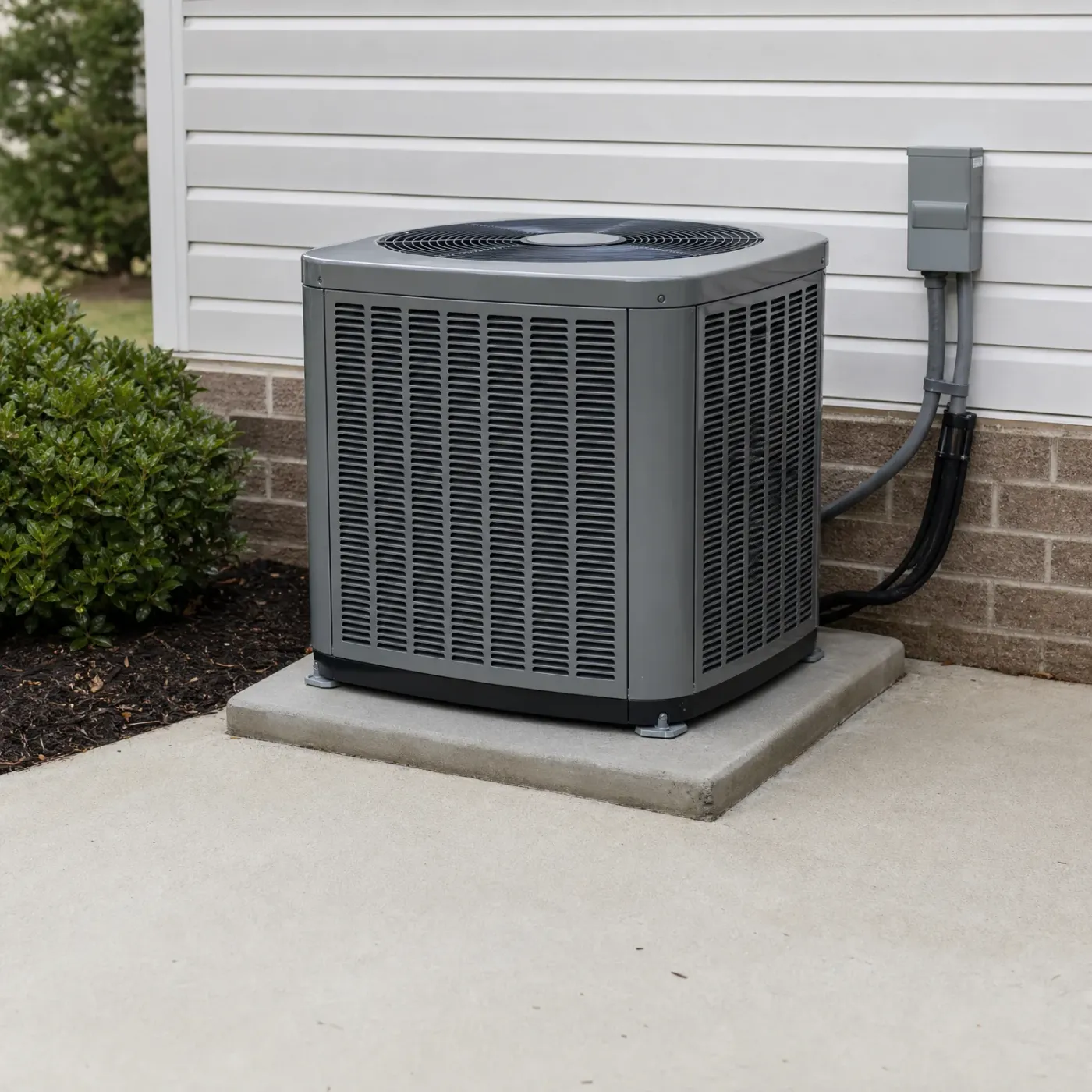
A gray outdoor air conditioner condenser unit on a concrete pad beside a house with white horizontal siding and a brick foundation, with a wall-mounted disconnect box and conduit, and a green shrub with mulch at left.

Running clean

This is a condenser that's been kept up. The coils are clear, the fan isn't fighting years of buildup, and the lines running up to the disconnect are doing their job without strain on the unit behind them. It sits there and works the way it's supposed to.

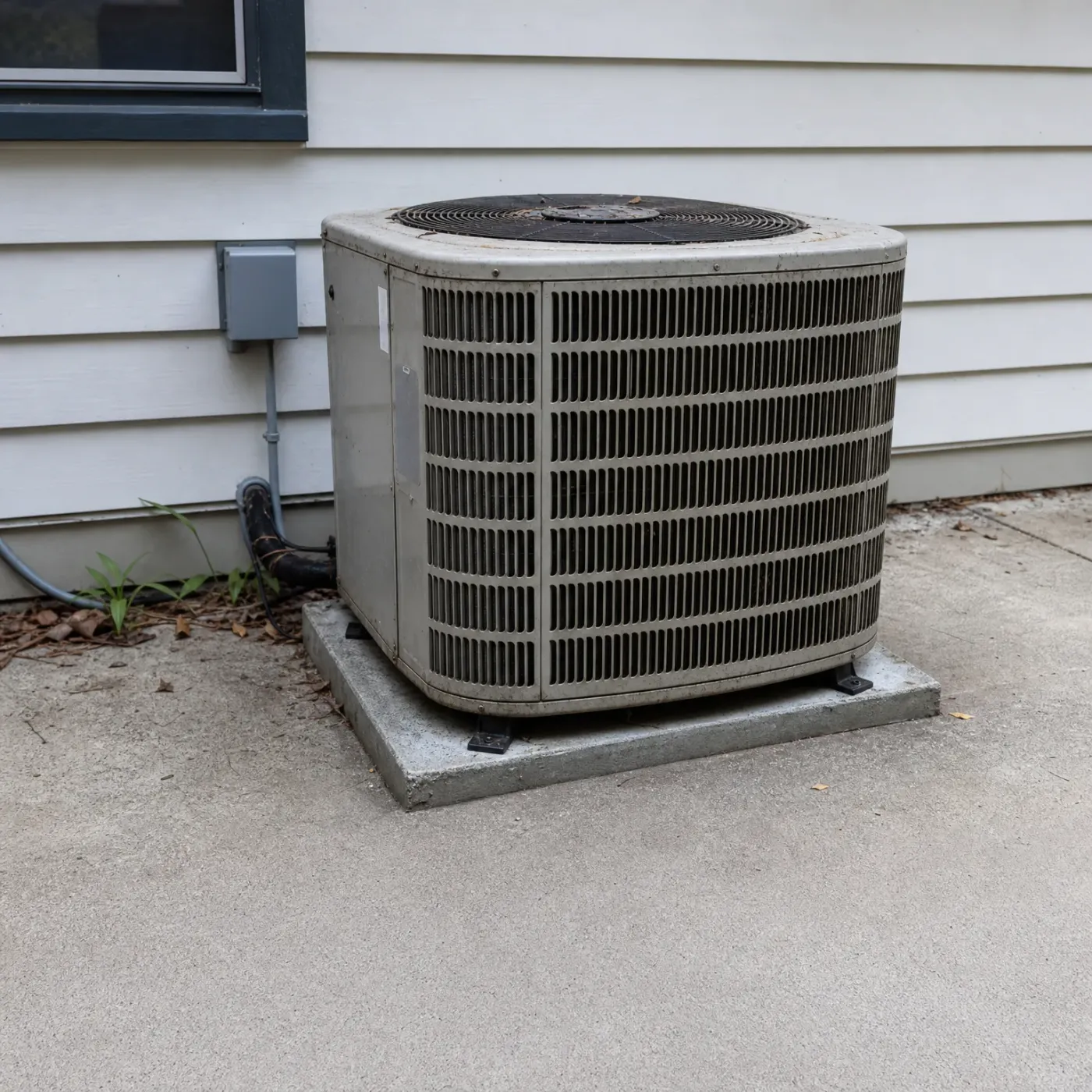
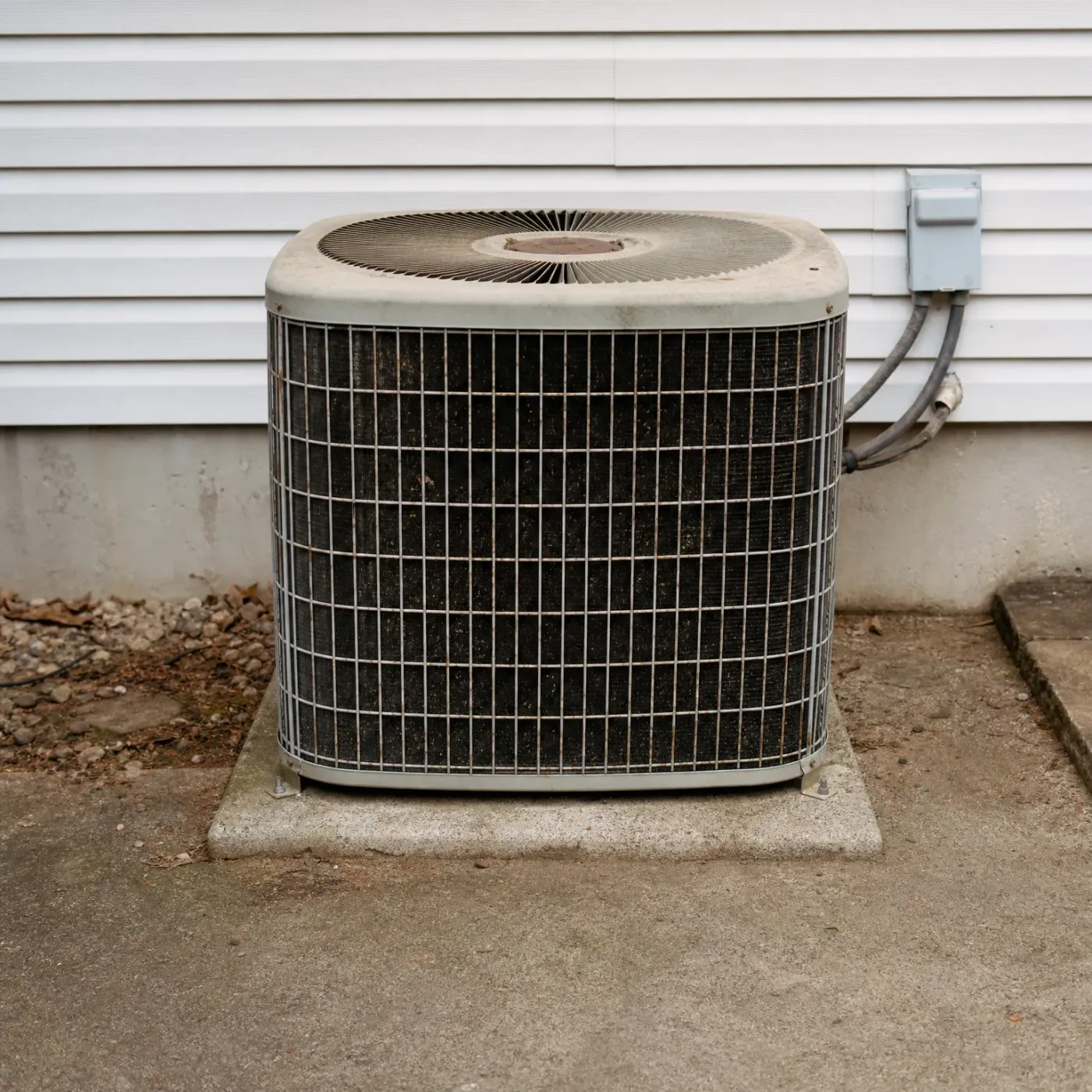
An outdoor air conditioning condenser unit on a concrete pad beside a house with white horizontal vinyl siding, with a gray electrical disconnect box and refrigerant lines on the wall behind it.

Choking on grime

The grille and the top cover on this one are caked with dirt. Air has to fight its way through that before it ever reaches the coil, so the unit runs longer and harder to cool the same house. Left like this through summer, that buildup only gets worse.

A woman stands in the open doorway of a white stucco house holding the dark door, facing a man in a black cap and shirt seen from behind in the blurred foreground, with a potted flowering plant beside the entry.

What actually happens during a tune-up

A contractor starts outside at the condenser, checking the refrigerant charge against what the unit is rated for. Too little and the coil can't pull enough heat out of your house. They test the capacitor, the part that gives the compressor and fan motor the jolt they need to start. A capacitor can read weak on a meter weeks before it fails outright, which is exactly why this gets caught now instead of in July.

Inside, the work moves to the evaporator coil and the blower. A dirty coil can't absorb heat the way a clean one does, so the system runs longer to do the same job. The blower wheel gets checked for the same reason, buildup on the blades throws off airflow even when the motor itself is fine. None of this is work you can see from the thermostat. It's why a system that sounds normal can still be running harder than it should, and why getting matched with a contractor who knows what to look for matters more than just getting someone out to the house.

A wooden table holding a stone vase with a bare branch, two stacked books and a small dark bowl, beside a window with green foliage outside and a sofa in the dim background.
A two-story white clapboard house with a gabled roof and small covered entry porch, flanked by two tall palm trees with sun flaring behind the roofline, and low shrubs and sandy ground in the foreground.

That dew point number on the card, 74°F, is what your AC is actually up against all summer, not just the thermometer reading. Air that heavy doesn't just feel sticky when you walk outside. Your unit has to pull that moisture out of the air inside your house before it can even start cooling it down, and that's the harder half of its job. A system that's behind on maintenance going into weather like that will run longer to get the same result, and you'll feel it as a house that cools but never quite feels dry. The coils and the refrigerant charge are what handle that load, and they're worth having checked before the air gets this heavy.

NASA POWER T2MDEW

A woman wrapped in a thick cream knit blanket sits in an armchair beside a lit table lamp, with an open book in the foreground and a frost-covered window behind her.
A woman in a cream knit sweater sits in an armchair with her eyes closed and a slight smile, beside an open window showing orange autumn foliage, with a mug, books and a lit candle on a small side table.

Get the tune-up done before the heat sets in, and you'll spend summer not thinking about your AC at all. That's the point of doing it now instead of waiting. A contractor checks the charge, the capacitor, the coils, the things that decide whether your unit cools your house or struggles to. Catching a weak part in March costs you an afternoon. Finding out about it in July costs you a day or more without air in a house that's already 90 degrees inside. Once you send the request, you're done with the hard part. Someone who does this work gets matched to your house and reaches out, and from there it's off your plate. You don't have to spend July calling around while your house sits warm. That's work you're handing off now, while the weather still gives you room to.

A single-story stone-clad house with low-voltage path lights along a gravel bed and lawn at dusk, with a tree line and orange sky on the horizon.

Air Conditioner Maintenance

Find an air conditioner maintenance pro in Hillsborough County

Step 1 of 3: Equipment
  • A pale ceramic vase holding dried hydrangea blooms sits on a wooden windowsill in sunlight, with green foliage blurred beyond the window glass.
    • Your request goes to a Hillsborough County pro who takes air conditioner jobs.
    • Get matched with someone who does this kind of work in Hillsborough County.
  • Sunlit window seat with a cushioned bench and three textured throw pillows beside a dark wooden round side table holding a small stone bowl and a potted green plant.
    • Send the form, and lining up the air conditioner tune-up stops being yours to chase.
    • Send the request and finding a pro stops being your problem.
  • A potted olive-like tree in a wide beige ceramic planter sits on a pale stone ledge beside a black-framed window with blurred greenery outside.
    • Skip calling around to set up an air conditioner tune-up.
    • One form instead of hunting for a pro who does air conditioner tune-ups.
  • A wooden bench by a black-framed window holds a beige striped pillow, a fringed knit throw, and a pale ceramic vase with olive branches, with green foliage and a white house visible outside.
    • The pro who gets in touch is licensed in Florida and works in Hillsborough County.
    • A licensed pro who works in Hillsborough County gets your request.