Tell us about the job
Takes about a minute. No obligation.
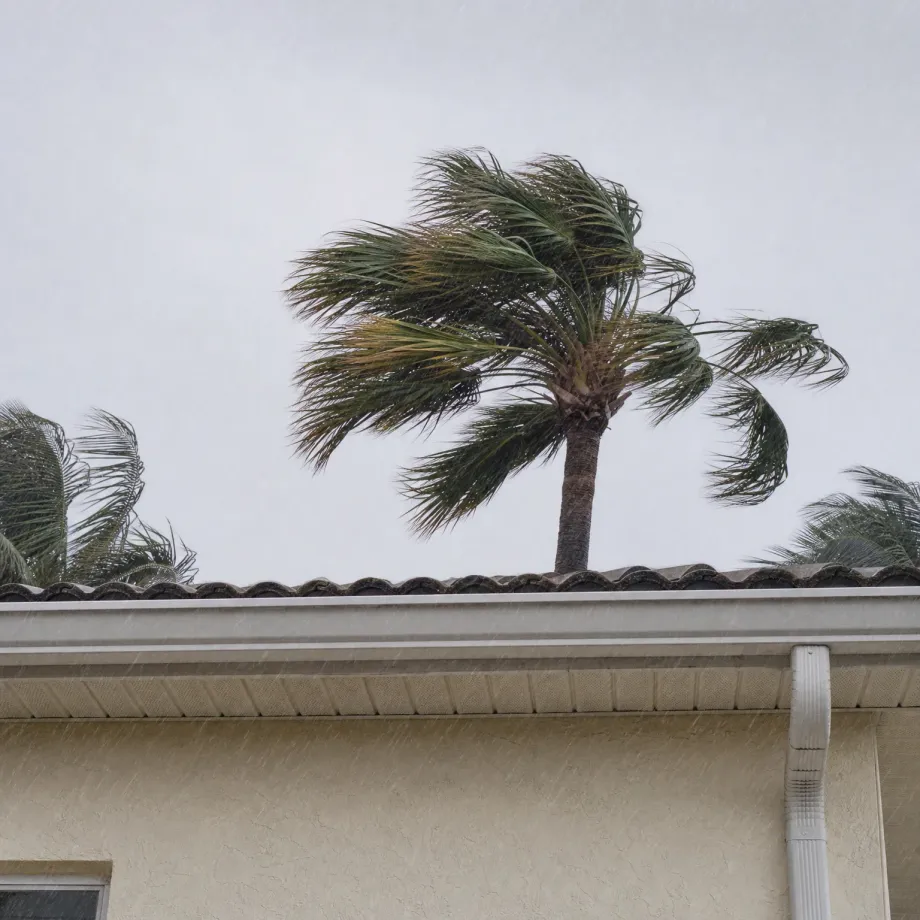
A repair diagnosis in Collier County starts with what the system has already been through. 78 severe weather events were recorded in Collier County, Florida between 2015 and 2024. At that rate, a contractor opening a unit here expects to find cumulative wear on components that absorb the hardest running conditions: capacitors, contactors, and refrigerant lines that have been cycled hard through repeated severe-weather loads. That wear pattern changes what the contractor prices first. A part that looks like a simple swap sometimes turns out to be a symptom of broader fatigue, and a contractor who has worked this area knows to check for that before writing a quote.
Half the homes in Collier County, Florida were built in 1996 or earlier (2020-2024 ACS 5-year). Houses that have gone through multiple equipment generations since they were built often carry systems whose replacement parts sit at the edge of what suppliers still stock. When a contractor opens a unit here and identifies the failed component, the next question is whether that part is available at all, and if it is, whether sourcing it changes the repair timeline and the bill. That answer shapes what a contractor recommends far more than the age printed on the building permit.
The Parts of a Central AC a Contractor Checks First
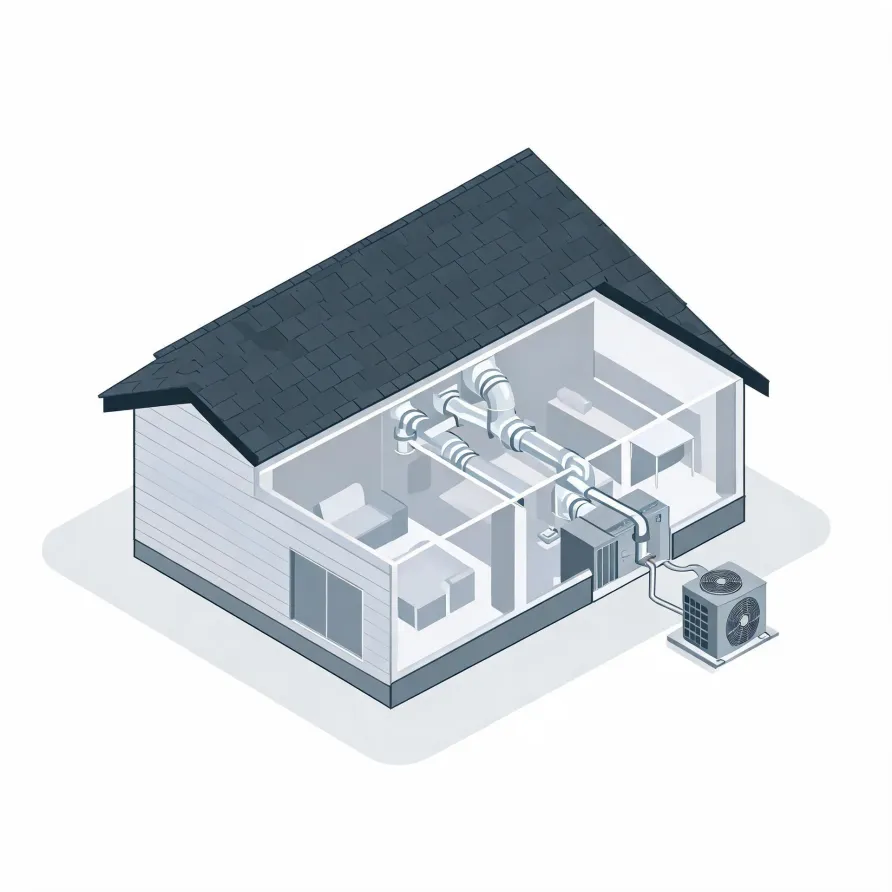
The outdoor condenser unit sits outside the house, usually on a concrete pad at ground level, and it holds the compressor and condenser coil. These are the pieces a contractor reaches first when a system stops cooling, short-cycles, or makes noise it should not. The compressor is the part most often at the center of a serious repair call.
Inside the house, the air handler holds the evaporator coil and the blower that pulls air across it. The air handler sits in a utility closet, attic, or garage depending on how the house was built. The refrigerant line set runs between the two units, and a faulty valve or low charge on that line shows up at both ends.
The drawing shows a typical layout, and a licensed contractor determines which components apply to your specific system and what each one needs.
Get matched in Collier CountyCollier County, by the numbers
78 severe weather events were recorded in Collier County, Florida between 2015 and 2024.
NOAA National Centers for Environmental Information, Storm Events Database, bulk CSV export, events 2015-01-01 through 2024-12-31.Half the homes in Collier County, Florida were built in 1996 or earlier (2020-2024 ACS 5-year).
U.S. Census Bureau, 2020-2024 American Community Survey 5-Year EstimatesCollier County, Florida holds 239,406 housing units (2020-2024 ACS 5-year).
U.S. Census Bureau, 2020-2024 American Community Survey 5-Year EstimatesOwners occupy 76.6% of the occupied homes in Collier County, Florida (2020-2024 ACS 5-year).
U.S. Census Bureau, 2020-2024 American Community Survey 5-Year EstimatesCodes & Standards Governing Central AC Repair in Collier County, Florida9 sourced rules and standards
What happens when the contractor comes out
Split-system central air conditioners rated below 45,000 Btu/h manufactured on or after January 1, 2023 must meet a federal minimum of 13.4 SEER2.
Split-system central air conditioners rated at or above 45,000 Btu/h manufactured on or after January 1, 2023 must meet a federal minimum of 13.4 SEER2.
Split-system central air conditioners manufactured between January 1, 2015 and December 31, 2022 had to meet 13 SEER, the metric that preceded SEER2.
Single-package central air conditioners manufactured on or after January 1, 2023 must meet a federal minimum of 13.4 SEER2.
Space-constrained central air conditioners manufactured on or after January 1, 2023 must meet a federal minimum of 11.7 SEER2.
Federal efficiency standards for split-system central air conditioners and heat pumps are set on each certified combination of outdoor unit and indoor coil rather than on the outdoor unit alone.
Residential and light commercial air conditioning and heat pump systems assembled in the field, including mini-splits and unitary systems, may not be installed on or after January 1, 2025 using a refrigerant with a global warming potential above 700.
A field-assembled system whose specified components were all manufactured or imported before January 1, 2025 carries no installation compliance date under the refrigerant restrictions and may still be installed.
Licensing Rules for HVAC Repair in Collier County, Florida
Florida requires a person to be certified or registered in order to engage in the business of contracting in the state.
Severe Weather Events in Collier County
Florida weather puts real strain on cooling equipment, and Collier County gets its share of conditions that push systems hard. How often that happens locally shapes how much repair work a central AC unit is likely to need over its life.
78 severe weather events, 2015–2024. Source: NOAA National Centers for Environmental Information, Storm Events Database.